
Qatar Signals Progress in US-Iran War Talks
Qatar's foreign ministry said mediators including Qatar, Pakistan, and Oman have reached "very progressive stages" in efforts to end the US-Iran war, pushing Brent crude down more than four percent.
Key Takeaways
May 26, 2026 · 3 min read · By Rishabh Bhardwaj
·
AI-assisted, human-reviewed · Our editorial standards
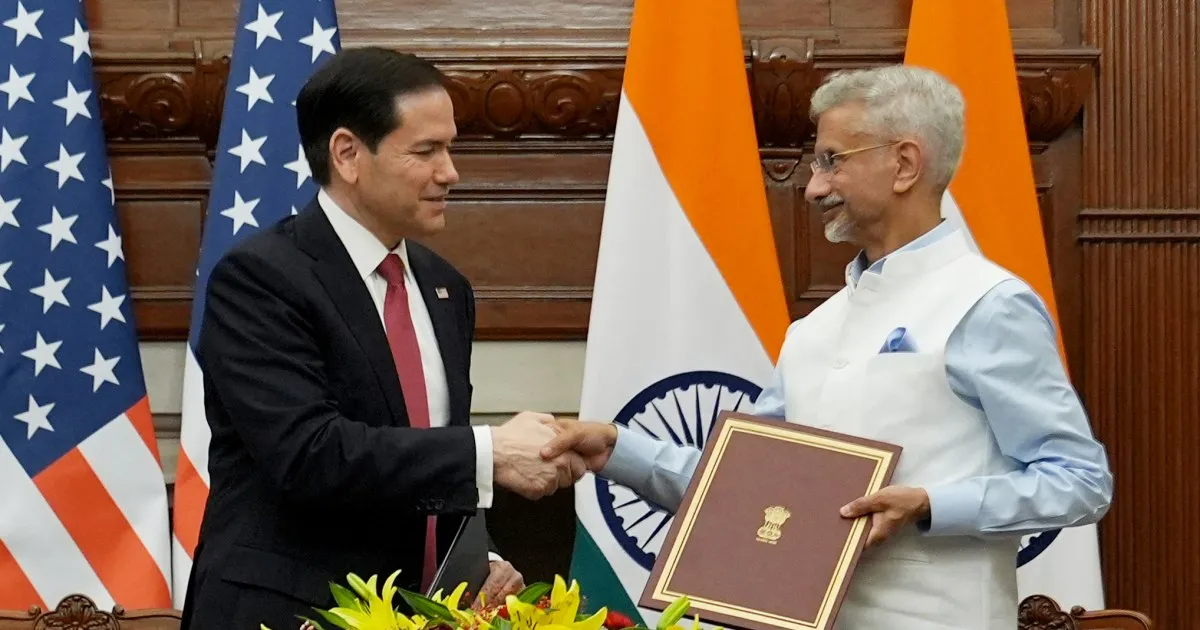
India and the United States have signed a critical minerals agreement, the latest in a series of deals Washington has pursued to reduce its dependence on China for rare earth elements and other strategic materials.
Critical minerals are the building blocks of modern technology and clean energy infrastructure. They go into electric vehicle batteries, semiconductors, defense systems, solar panels, and a wide range of electronics. The US has long relied heavily on China, which dominates both the mining and processing of many of these materials, creating a supply chain vulnerability that American policymakers have been working to address for years.
The agreement between India and the US creates a framework for cooperation on the sourcing, processing, and trade of critical minerals. India holds significant reserves of minerals including titanium, thorium, and manganese, and has been expanding its own domestic mining and processing capacity. By aligning with the US, India positions itself as a preferred supplier and processing partner, with the potential to attract investment into its minerals sector.
The deal fits into a broader pattern. The US has signed similar critical minerals agreements with countries including Australia, Canada, Japan, and several others as it works to build a network of trusted suppliers outside China. Each agreement is designed to make it easier for American companies to source materials from partner countries, and to qualify those materials for incentives under US industrial policy.
The timing reflects pressure on both sides. The US is accelerating efforts to secure supply chains for technologies it considers strategically important, from electric vehicles to advanced semiconductors and military hardware. Access to reliable mineral supplies is now treated as a national security question, not just an economic one.
For India, the deal carries real economic opportunity. Being recognized as a critical minerals partner by the US could draw foreign investment into Indian mining and refining projects, create industrial jobs, and strengthen India's position in global supply chains for high-growth sectors. It also deepens the broader strategic and economic relationship between New Delhi and Washington at a time when both governments are looking to expand bilateral trade.
The agreement also carries competitive significance. China currently controls a large share of the global processing capacity for rare earths and other critical minerals, even for materials mined elsewhere. A working US-India partnership on minerals could gradually shift some of that processing activity, though building refining capacity at scale takes years and substantial capital investment.
For US manufacturers and technology companies, diversified supply chains reduce the risk of disruption. Single-source dependence on any one country creates leverage that can be used in trade disputes or geopolitical crises. Spreading supply across multiple partner countries makes that leverage harder to apply.
The practical effects will take time to materialize. Agreements like this create the legal and diplomatic scaffolding for investment and trade, but the actual flow of minerals depends on project development, infrastructure, and commercial decisions that play out over a longer horizon. Investors and industry watchers will look for follow-on announcements about specific projects, funding commitments, or joint ventures that give the framework real commercial substance.
What to watch next includes whether the deal includes provisions that qualify Indian-sourced minerals for benefits under US legislation such as the Inflation Reduction Act, which ties electric vehicle and battery incentives to supply chain sourcing requirements. That linkage would significantly increase the commercial value of the agreement for Indian producers and US buyers alike.
Qatar's foreign ministry said mediators including Qatar, Pakistan, and Oman have reached "very progressive stages" in efforts to end the US-Iran war, pushing Brent crude down more than four percent.
Qatar confirmed it is mediating between the US and Iran but said no direct talks are currently planned. The clarification follows conflicting statements from President Trump, who claimed talks are under way, and Tehran, which denied any dialogue is happening.
Saudi Aramco reported sharply higher second-quarter 2026 profits as the Iran war restricts global oil supply and pushes crude prices up. Other oil supermajors also posted outsized earnings, raising concerns about sustained fuel cost pressure for importing economies.
President Trump called current Iran negotiations the "last chance" to end five months of conflict, pushing oil prices higher. Tehran denied formal talks are taking place, raising the risk of a diplomatic breakdown with direct consequences for global energy markets.