An Indian government bill to expand state and parliamentary assemblies failed to pass in parliament on Friday, falling short of the votes needed, a rare legislative defeat for Prime Minister Narendra Modi. The bill was directly tied to the implementation of a women's reservation policy that would set aside one-third of seats for women in India's legislatures. Without the assembly expansion, the timeline for that quota mechanism is effectively stalled. The women's reservation law, already on the books, is contingent on a delimitation exercise, a redrawing of constituency boundaries, which the expansion bill was designed to accelerate. Friday's vote failure means that process cannot move forward on the proposed schedule, leaving the quota's activation date uncertain. Modi's government commands a strong parliamentary presence, making the defeat notable as a signal of either coalition friction or opposition coordination. Observers will watch whether the government reintroduces the bill in a subsequent session or pursues an alternative path to trigger delimitation.
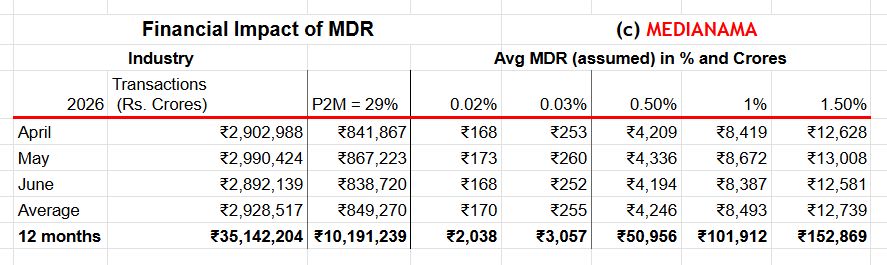
India's government plans to amend the Payment and Settlement Systems Act to restore UPI merchant discount rates, ending the zero-MDR regime in place since January 2020.
India's government has introduced the Taxation and Other Laws (Amendment) Bill, 2026, proposing changes to payments regulation, income tax, and the Finance Act to attract FDI and support Make in India. The Bill's final shape will depend on parliamentary debate and committee review.
The government's Taxation and Other Laws (Amendment) Bill, 2026, proposes to replace the blanket UPI MDR ban with a system allowing the Centre to notify which payment modes stay fee-free.
Prime Minister Narendra Modi inaugurated the Rs 5,000 crore Bhogapuram greenfield airport in Andhra Pradesh, built under a public-private partnership model. He also laid foundation stones for infrastructure projects worth nearly Rs 18,000 crore in the state, signalling a broad investment push for the region.