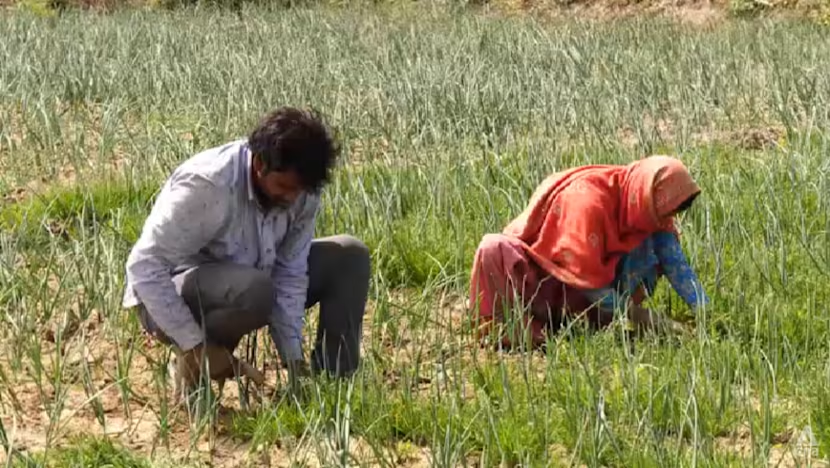
India may be heading into a weaker monsoon season, a development that analysts warn could push up food prices and slow economic growth if rainfall falls significantly below normal levels.
The monsoon is the backbone of Indian agriculture. Around half of the country's farmland relies on rain rather than irrigation, and the June-to-September season determines how much gets planted and harvested, from rice and pulses to oilseeds and vegetables. A shortfall in rainfall directly squeezes farm output, which then feeds into higher prices at the market.
How a Weak Monsoon Hits the Economy
The chain of effects is fairly direct. Lower farm yields mean tighter supply of staple foods. Tighter supply pushes up prices. Food carries a large weight in India's consumer price index, historically around 45-50%, so even moderate crop shortfalls can keep inflation elevated for months. That makes it harder for the Reserve Bank of India to cut interest rates, since easing policy while inflation is running hot risks making price pressures worse.
Growth takes a hit from two directions. First, rural incomes fall when harvests are poor, reducing spending in one of the economy's largest consumer segments. Second, higher food inflation erodes purchasing power for urban households too, softening demand across the board. Agriculture directly accounts for roughly 15-18% of India's GDP, but its indirect influence through rural consumption and employment is considerably larger.
What to Watch
The India Meteorological Department typically issues its first long-range forecast ahead of the season, with updated outlooks through May and June. Markets and policymakers will watch closely for any revision toward a below-normal classification, which is generally defined as rainfall below 90% of the long-period average. Crops sown in the kharif season, the main monsoon crop cycle, are the most exposed, with rice, pulses, and soybeans among the key affected commodities.
For investors, a confirmed weak monsoon could weigh on rural consumption stocks, keep food inflation sticky, and reduce the likelihood of near-term rate cuts by the RBI. The agricultural input sector, seeds, fertilisers, tractors, would also feel the pressure if farmers pull back on spending due to income uncertainty.
At this stage, the risk is flagged by analysts but a formal forecast confirming below-normal rainfall has not been confirmed in the source material. The situation warrants monitoring as seasonal forecast data becomes available over the coming weeks.