India's IT ministry has rejected a proposal from the Unique Identification Authority of India (UIDAI) to mandate pre-installation of the Aadhaar biometric ID app on smartphones sold by Apple, Samsung, and others. The ministry reached its decision after consulting electronics industry representatives, though it offered no formal rationale. UIDAI confirmed the reversal in a statement to Reuters on Friday. Aadhaar assigns a 12-digit identity number linked to fingerprints and iris scans to nearly 1.34 billion residents, and is embedded across banking, telecom, and airport verification infrastructure. Smartphone makers had opposed the proposal on device security, compatibility, and cost grounds, mandatory preloading would have required separate manufacturing lines for India versus export markets, raising unit production costs. This marks the sixth consecutive rejection of a government app-preload request in two years, with all six attempts blocked by industry opposition. A senior Indian official said the IT ministry opposes preloading unless an app is deemed "very essential." The pattern signals a structural friction point for Modi's digital-push agenda as India simultaneously courts Apple and others to deepen smartphone manufacturing investment in the country. The Aadhaar app itself carries residual risk: privacy advocates have documented repeated data leaks exposing personal details of millions of holders on the dark web, a liability that mandatory device-level distribution would have amplified.
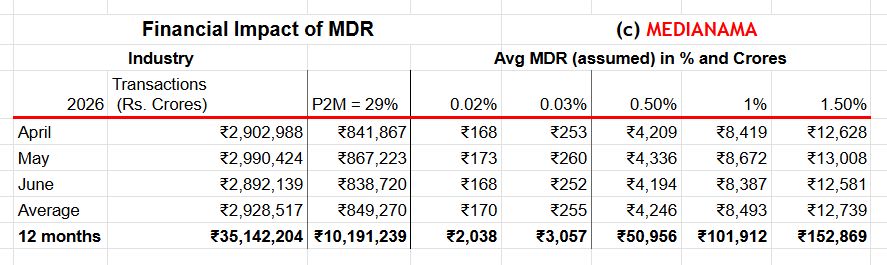
India's government plans to amend the Payment and Settlement Systems Act to restore UPI merchant discount rates, ending the zero-MDR regime in place since January 2020.
India's government has introduced the Taxation and Other Laws (Amendment) Bill, 2026, proposing changes to payments regulation, income tax, and the Finance Act to attract FDI and support Make in India. The Bill's final shape will depend on parliamentary debate and committee review.
The government's Taxation and Other Laws (Amendment) Bill, 2026, proposes to replace the blanket UPI MDR ban with a system allowing the Centre to notify which payment modes stay fee-free.
Prime Minister Narendra Modi inaugurated the Rs 5,000 crore Bhogapuram greenfield airport in Andhra Pradesh, built under a public-private partnership model. He also laid foundation stones for infrastructure projects worth nearly Rs 18,000 crore in the state, signalling a broad investment push for the region.