India's Election Commission has removed roughly 9 million voters from the electoral rolls, about 10% of the total, just weeks before the West Bengal state election. The deletions represent a significant reduction in registered voters and have drawn attention given the timing ahead of a high-stakes state poll. West Bengal elections are closely watched nationally; the state is a major political battleground between the ruling Trinamool Congress and the Bharatiya Janata Party. Electoral roll revisions are a standard process under Indian election law, meant to remove duplicate entries, deceased voters, and those who have moved. However, a deletion of this scale, this close to polling day, is unusual and raises questions about which voter groups are affected. The Election Commission has not detailed the breakdown of who was removed or the specific grounds for each deletion. The key thing to watch is whether any affected voters or political parties challenge the rolls in court, and whether the Commission provides a public accounting of the removals before voting begins.
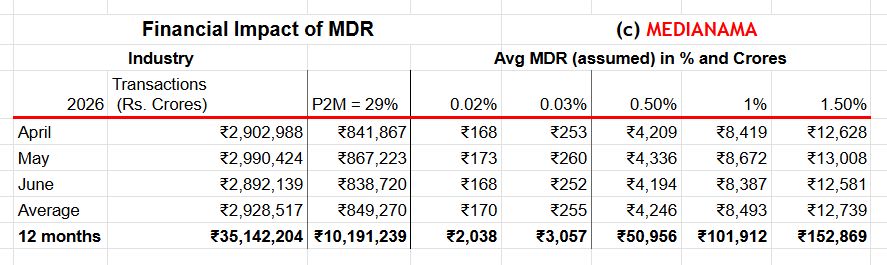
India's government plans to amend the Payment and Settlement Systems Act to restore UPI merchant discount rates, ending the zero-MDR regime in place since January 2020.
India's government has introduced the Taxation and Other Laws (Amendment) Bill, 2026, proposing changes to payments regulation, income tax, and the Finance Act to attract FDI and support Make in India. The Bill's final shape will depend on parliamentary debate and committee review.
The government's Taxation and Other Laws (Amendment) Bill, 2026, proposes to replace the blanket UPI MDR ban with a system allowing the Centre to notify which payment modes stay fee-free.
Prime Minister Narendra Modi inaugurated the Rs 5,000 crore Bhogapuram greenfield airport in Andhra Pradesh, built under a public-private partnership model. He also laid foundation stones for infrastructure projects worth nearly Rs 18,000 crore in the state, signalling a broad investment push for the region.