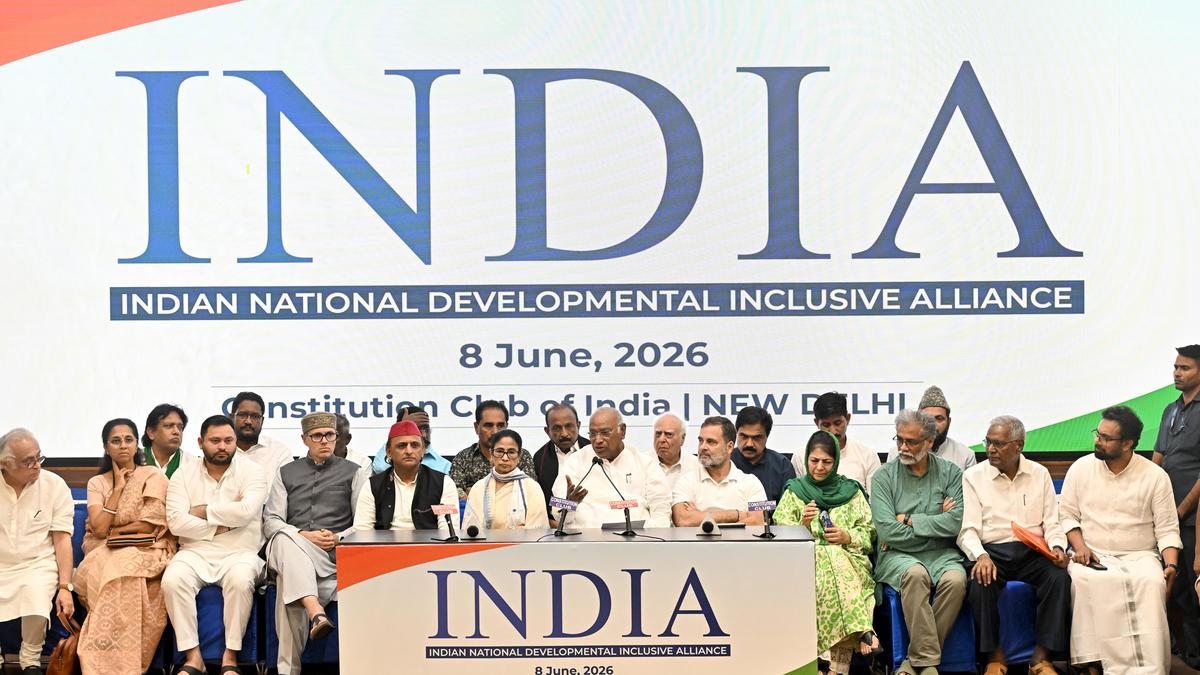
The Indian National Developmental Inclusive Alliance, known as INDIA bloc, is consolidating around Congress as its undisputed anchor party, after the bruising electoral defeat of Trinamool Congress in West Bengal removed the one regional force capable of seriously contesting Congress's leadership of the opposition coalition.
Trinamool's West Bengal loss marks a significant shift in the internal balance of the INDIA bloc. The party had spent much of the coalition's early years positioning itself as an alternative power centre, with its own national ambitions and a willingness to publicly challenge Congress's decisions on seat-sharing and candidate selection. That leverage has now eroded sharply.
The defection of Trinamool MPs and MLAs in the wake of the West Bengal defeat has compounded the party's weakened position. When elected representatives leave in numbers, it signals to other coalition partners that the party's negotiating weight is falling. For Congress, this creates an opening to set the terms of the alliance more firmly ahead of the 2029 general elections.
Trinamool Signals a Shift
Despite the friction of recent years, Trinamool has indicated a possible alliance with Congress for the 2029 general elections. That is a notable softening of tone from a party that had, at points, operated almost independently within the broader opposition umbrella. The signal matters because it suggests Trinamool's leadership has concluded that going it alone, or continuing to contest Congress's primacy, is no longer a viable path to national relevance.
For Congress, the optics are useful but the caveats are real. Bloc unity built on a partner's weakness is more fragile than unity built on genuine strategic alignment. The phrase the headline itself uses, that parties are closing ranks but not without caveats, captures a coalition that is consolidating by default as much as by design.
What Changes in Opposition Politics
The practical effect is that Congress now faces fewer internal challengers when negotiating seat distribution for 2029. Regional parties that might have deferred to Trinamool as a counterweight to Congress will find that option less credible. This could push smaller INDIA bloc partners to either accept Congress's terms more readily or seek individual accommodation outside the coalition.
Trinamool's trajectory also carries a warning for other regional parties within the bloc. Electoral reversals at the state level translate directly into reduced leverage at the coalition table. The INDIA bloc's internal dynamics, always a negotiation between Congress's national reach and regional parties' home-state strength, will tilt further toward Congress if other partners face similar pressures in their own states before 2029.
The broader opposition challenge remains unchanged: Congress must translate internal coalition primacy into a credible national electoral strategy. Holding the bloc together is a necessary condition, not a sufficient one. The caveats that INDIA bloc partners have attached to their support are a reminder that alliance management will remain demanding, even with Trinamool's position weakened.
For now, the consolidation gives Congress's leadership a cleaner run at framing opposition messaging and managing candidate negotiations as the 2029 election cycle approaches. How durable that consolidation proves will depend on whether Congress can deliver results in state elections between now and then, giving regional partners a reason to stay aligned rather than simply having fewer alternatives.