India is stepping up its maritime infrastructure push, with Union Minister Sarbananda Sonowal chairing an inter-ministerial review to build a more resilient shipping and port ecosystem. The move comes amid growing concern over supply chain vulnerability linked to the Strait of Hormuz, a critical chokepoint through which a large share of India's energy imports travel. The meeting brought together multiple ministries to coordinate a unified response to both strategic and logistical risks in global sea lanes. The focus was on hardening national supply chains against disruptions, whether from geopolitical tension, conflict, or bottlenecks at key maritime passages. India imports a significant portion of its crude oil through the Hormuz route, making any closure or restriction there a direct economic risk. What to watch: the pace at which inter-ministerial coordination translates into port capacity expansion, alternative routing plans, and investment commitments that can reduce dependence on vulnerable sea passages.
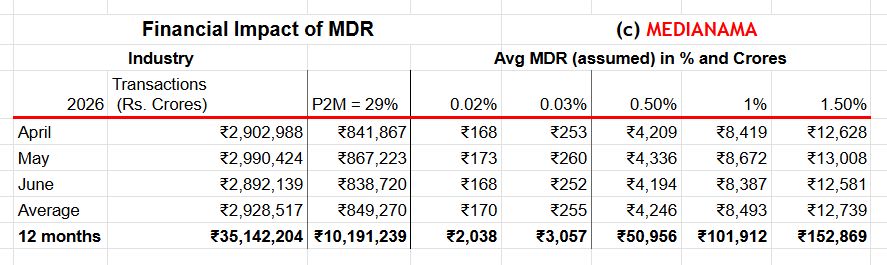
India's government plans to amend the Payment and Settlement Systems Act to restore UPI merchant discount rates, ending the zero-MDR regime in place since January 2020.
India's government has introduced the Taxation and Other Laws (Amendment) Bill, 2026, proposing changes to payments regulation, income tax, and the Finance Act to attract FDI and support Make in India. The Bill's final shape will depend on parliamentary debate and committee review.
The government's Taxation and Other Laws (Amendment) Bill, 2026, proposes to replace the blanket UPI MDR ban with a system allowing the Centre to notify which payment modes stay fee-free.
Prime Minister Narendra Modi inaugurated the Rs 5,000 crore Bhogapuram greenfield airport in Andhra Pradesh, built under a public-private partnership model. He also laid foundation stones for infrastructure projects worth nearly Rs 18,000 crore in the state, signalling a broad investment push for the region.