India to Restore UPI Merchant Fees, PhonePe Gains Most
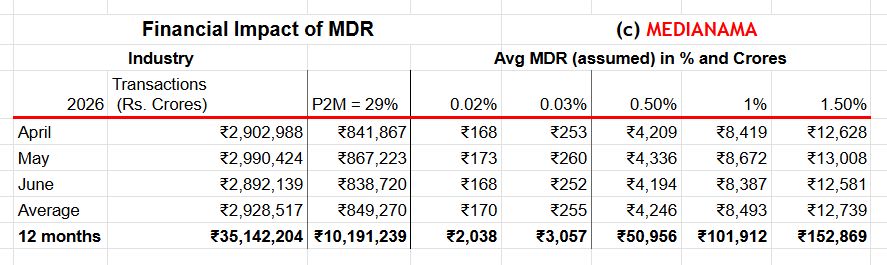
India's government plans to amend the Payment and Settlement Systems Act to restore UPI merchant discount rates, ending the zero-MDR regime in place since January 2020.
Key Takeaways
May 9, 2026 · 2 min read · By Rishabh Bhardwaj
·
AI-assisted, human-reviewed · Our editorial standards

Suvendu Adhikari, set to become West Bengal's first BJP chief minister, declared the state's election result a historic moment, promising a "double-engine" era of development driven by aligned state and central governments.
The phrase "double-engine government" refers to the BJP's standard pitch that states with BJP governments can work in closer sync with the BJP-led central government in New Delhi, unlocking faster approvals, more central funds, and smoother policy execution. Adhikari used the term to signal that West Bengal would now benefit from this alignment after years of Trinamool Congress rule under Mamata Banerjee.
A BJP government in West Bengal would mark a significant political shift in a state that has been outside the party's direct control despite it being a key national battleground. The TMC has governed the state since 2011, and BJP has positioned this win as a breakthrough in eastern India.
Adhikari framed the transition as the start of "peace and prosperity," language that implicitly references the law-and-order narrative BJP ran on during the campaign, pointing to political violence and governance concerns in the state.
The immediate questions are around cabinet formation, whether central schemes stalled or disputed under TMC rule get fast-tracked, and how the new administration manages the state's finances. West Bengal carries a significant debt burden, and any large development push will depend on both central transfers and the state's own fiscal headroom.
Political observers will also watch how BJP governs a state with a complex social fabric, strong opposition infrastructure, and a civil society that has historically been skeptical of the party's national agenda. Adhikari's ability to translate campaign promises into visible governance will determine whether this win consolidates BJP's eastern expansion or remains a single-cycle result.
India's government plans to amend the Payment and Settlement Systems Act to restore UPI merchant discount rates, ending the zero-MDR regime in place since January 2020.
India's government has introduced the Taxation and Other Laws (Amendment) Bill, 2026, proposing changes to payments regulation, income tax, and the Finance Act to attract FDI and support Make in India. The Bill's final shape will depend on parliamentary debate and committee review.
The government's Taxation and Other Laws (Amendment) Bill, 2026, proposes to replace the blanket UPI MDR ban with a system allowing the Centre to notify which payment modes stay fee-free.
Prime Minister Narendra Modi inaugurated the Rs 5,000 crore Bhogapuram greenfield airport in Andhra Pradesh, built under a public-private partnership model. He also laid foundation stones for infrastructure projects worth nearly Rs 18,000 crore in the state, signalling a broad investment push for the region.