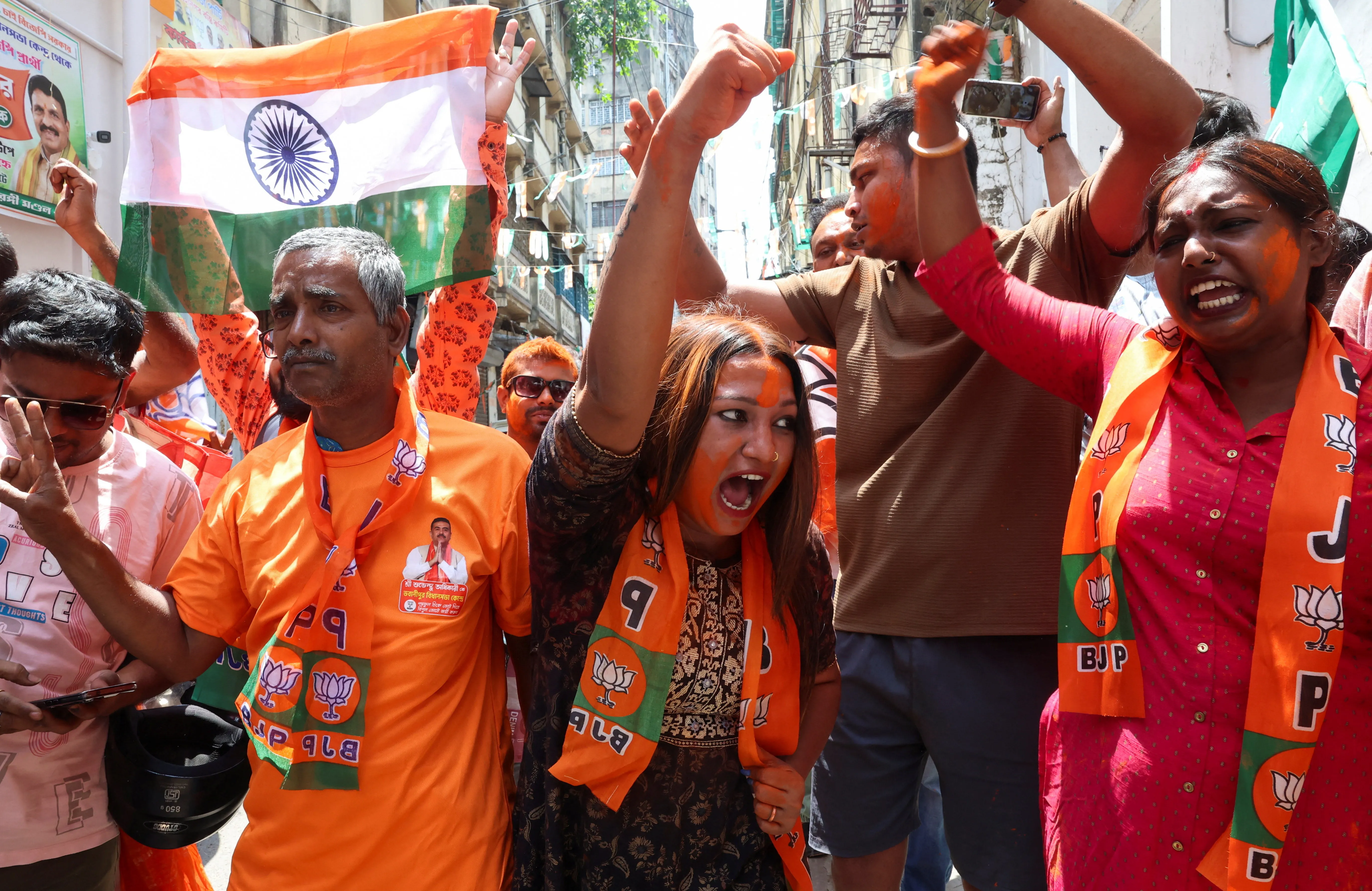
Narendra Modi's Bharatiya Janata Party has won West Bengal for the first time, a result that marks one of the most significant shifts in Indian state politics in decades. The BJP swept the state by combining a religious polarisation campaign with growing voter frustration against the ruling Trinamool Congress government led by Mamata Banerjee.
West Bengal has long been one of the BJP's most coveted targets. The state spent 34 years under Left Front rule before Mamata Banerjee's Trinamool Congress broke that dominance in 2011. The BJP had been pushing hard in Bengal since the 2019 general elections, when it made significant seat gains, but had never been able to convert that momentum into a state government win, until now.
How the BJP Built Its Win
Two forces drove the result. First, the BJP leaned heavily into religious identity politics, framing the contest around Hindu consolidation in a state with a substantial Muslim minority. This approach has been central to the party's playbook in other states and appears to have worked in Bengal's specific demographic and social conditions.
Second, and equally important, was anti-incumbency against Trinamool Congress. Banerjee's government, in power since 2011, faces voter anger over issues that had been building for years. When anti-incumbency and a sharp polarisation campaign run together, they tend to produce decisive swings, and that appears to be what happened here.
What This Means Politically
A BJP government in West Bengal would give the party control over one of India's most populous and politically symbolic states. Bengal has historically been a stronghold of opposition politics, and its fall to the BJP reshapes the national political map ahead of future general elections. It also weakens Mamata Banerjee's position as a potential national opposition figure, a role she has actively sought.
For the BJP, this win consolidates what the party frames as a national footprint. Holding Bengal means the party now governs or influences a much larger share of India's electorate across the country's east, north, and west.
Watch for how Trinamool Congress responds, whether Banerjee contests the result legally, how the transition of power unfolds, and whether the BJP can hold together the coalition of voters it assembled. State elections in India often turn on local delivery once the campaign energy fades, and Bengal will be a test of whether the BJP can govern effectively in a state where it has no prior administrative experience at the top level.