The Gujarat High Court has issued notices to Meta, X, and Google in response to a PIL petition seeking judicial intervention to curb the misuse of artificial intelligence across their platforms. The case stems from reported patterns of non-compliance by tech platforms with lawful notices, including frequent delays and repeated procedural failures cited by both the Union and Gujarat state governments before the court. The PIL's central demand is a judicial check on AI misuse, situating the case within India's broader and still-evolving regulatory vacuum around generative AI and platform accountability. The court's notice-issuance is a preliminary procedural step, compelling the three companies to formally respond and enter the litigation record. How Meta, X, and Google frame their replies will signal their compliance posture ahead of any possible Indian legislative action on AI governance. Watching for the companies' formal responses and whether the court elevates the matter to a full bench will indicate how seriously the judiciary intends to pursue platform accountability on AI.
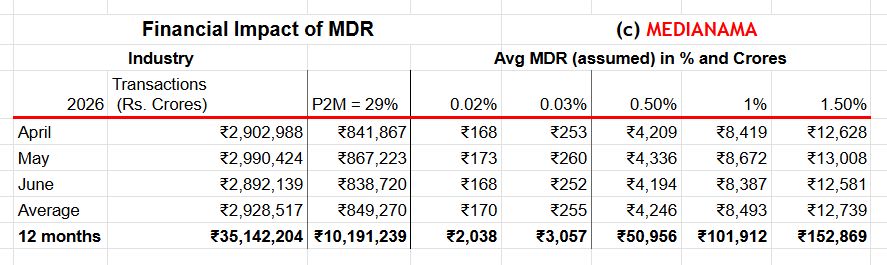
India's government plans to amend the Payment and Settlement Systems Act to restore UPI merchant discount rates, ending the zero-MDR regime in place since January 2020.
India's government has introduced the Taxation and Other Laws (Amendment) Bill, 2026, proposing changes to payments regulation, income tax, and the Finance Act to attract FDI and support Make in India. The Bill's final shape will depend on parliamentary debate and committee review.
The government's Taxation and Other Laws (Amendment) Bill, 2026, proposes to replace the blanket UPI MDR ban with a system allowing the Centre to notify which payment modes stay fee-free.
Prime Minister Narendra Modi inaugurated the Rs 5,000 crore Bhogapuram greenfield airport in Andhra Pradesh, built under a public-private partnership model. He also laid foundation stones for infrastructure projects worth nearly Rs 18,000 crore in the state, signalling a broad investment push for the region.