India's central government has authorized 15 banks to import gold and silver for a three-year window running from April 1, 2026 to March 31, 2029. The approved institutions include State Bank of India, HDFC Bank, Axis Bank, and Bank of India, among others. The authorization formalizes the import channel through which the bulk of India's precious metals supply flows, as banks serve as the primary conduit between global bullion markets and domestic demand. India is one of the world's largest consumers of gold, and bank-led import licenses directly shape the volume, pricing, and availability of bullion in the domestic market. Extending the authorization through March 2029 provides multi-year import certainty, reducing operational ambiguity for jewelers, refiners, and traders who source metal through these institutions. The key variable to watch is whether the government attaches revised duty structures or quantity caps to the new authorization period, either of which would materially affect landed cost and retail gold prices.
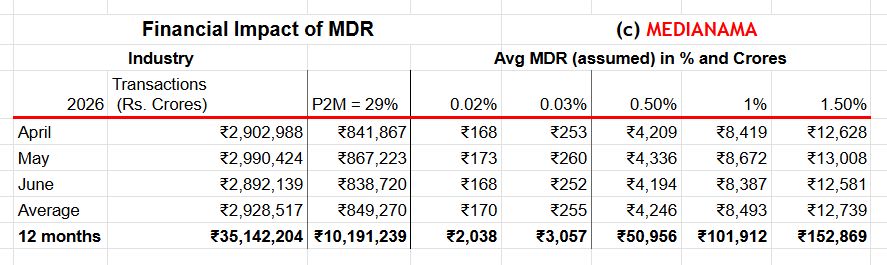
India's government plans to amend the Payment and Settlement Systems Act to restore UPI merchant discount rates, ending the zero-MDR regime in place since January 2020.
India's government has introduced the Taxation and Other Laws (Amendment) Bill, 2026, proposing changes to payments regulation, income tax, and the Finance Act to attract FDI and support Make in India. The Bill's final shape will depend on parliamentary debate and committee review.
The government's Taxation and Other Laws (Amendment) Bill, 2026, proposes to replace the blanket UPI MDR ban with a system allowing the Centre to notify which payment modes stay fee-free.
Prime Minister Narendra Modi inaugurated the Rs 5,000 crore Bhogapuram greenfield airport in Andhra Pradesh, built under a public-private partnership model. He also laid foundation stones for infrastructure projects worth nearly Rs 18,000 crore in the state, signalling a broad investment push for the region.