The government has established a panel to investigate the assets of politicians and public officials, covering the period from 2006 to the present. The move signals an institutional push toward accountability, though the scope, legal authority, and composition of the panel are not detailed in available reporting. Political parties have responded with conditional support, calling for the inquiry to be grounded in evidence and warning that the process should not be weaponized against opposition figures. The dual concern, endorsing scrutiny while flagging selective enforcement risk, reflects a familiar tension in asset-disclosure probes across emerging and transitional democracies. How the panel defines its mandate and which cases it prioritizes first will determine whether it functions as a credible anti-corruption instrument or a politically directed exercise. Observers should watch for the panel's formal terms of reference, any prosecutorial or referral powers it holds, and whether its findings are subject to independent judicial review.
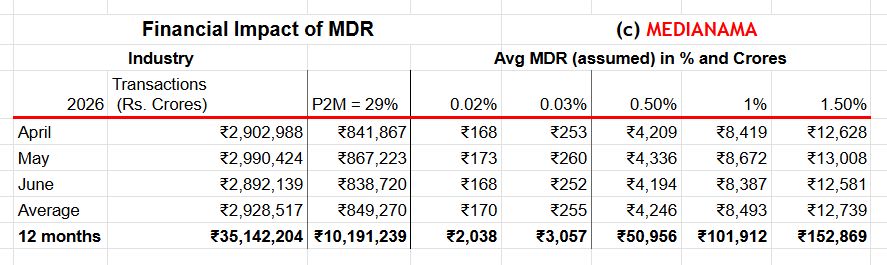
India's government plans to amend the Payment and Settlement Systems Act to restore UPI merchant discount rates, ending the zero-MDR regime in place since January 2020.
India's government has introduced the Taxation and Other Laws (Amendment) Bill, 2026, proposing changes to payments regulation, income tax, and the Finance Act to attract FDI and support Make in India. The Bill's final shape will depend on parliamentary debate and committee review.
The government's Taxation and Other Laws (Amendment) Bill, 2026, proposes to replace the blanket UPI MDR ban with a system allowing the Centre to notify which payment modes stay fee-free.
Prime Minister Narendra Modi inaugurated the Rs 5,000 crore Bhogapuram greenfield airport in Andhra Pradesh, built under a public-private partnership model. He also laid foundation stones for infrastructure projects worth nearly Rs 18,000 crore in the state, signalling a broad investment push for the region.