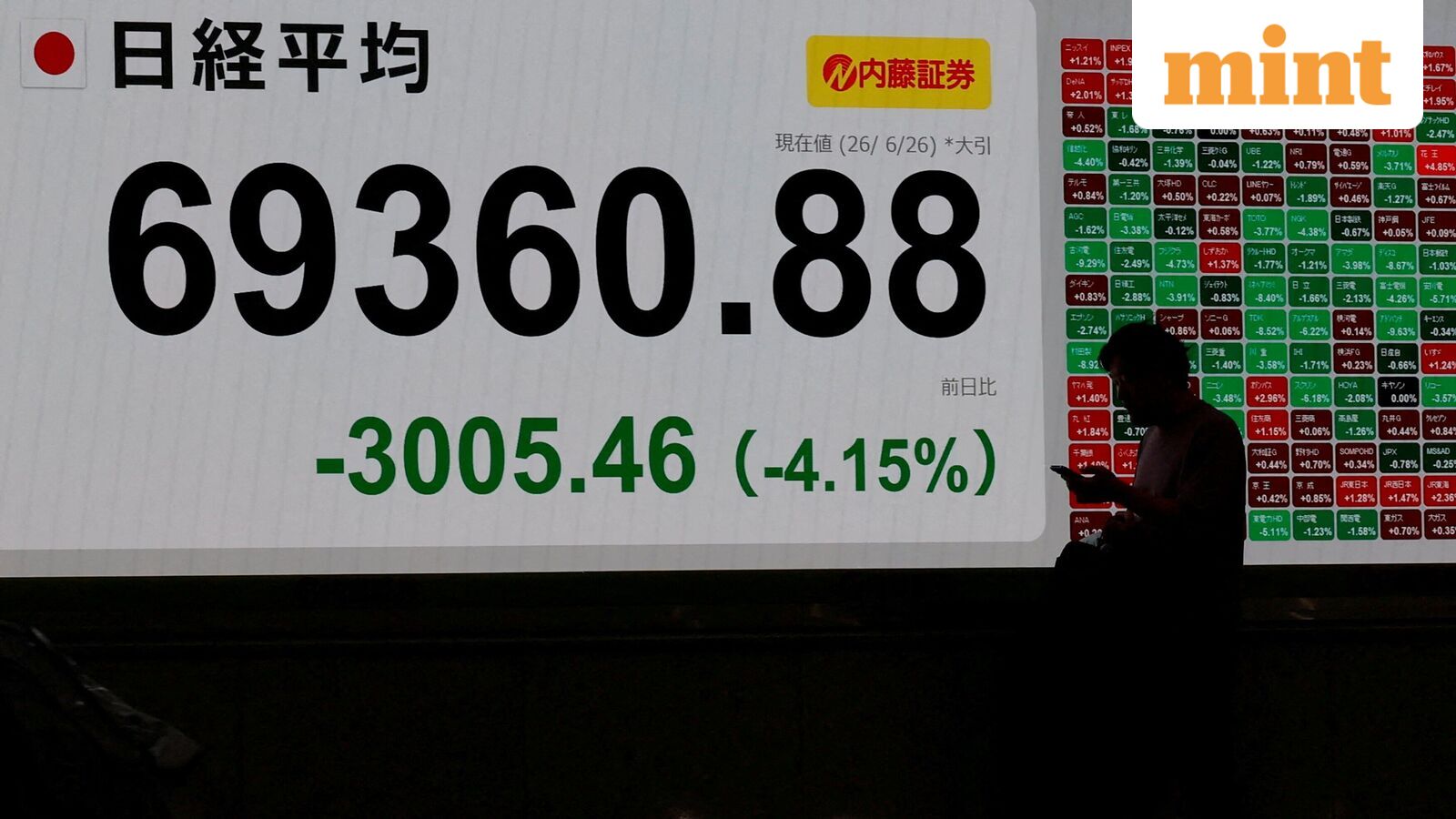
Indian equity markets are set to open sharply lower on Monday, with Gift Nifty trading around 24,056, a discount of roughly 186 points from Nifty futures' previous close. That gap signals a negative start for both the Nifty 50 and Sensex when trading begins.
What drove the weekend shift
Several global developments over the weekend have combined to push sentiment lower. Escalating tensions between the US and Iran are weighing heavily on risk appetite across Asian markets. Geopolitical conflict in the Middle East typically triggers a flight to safety, meaning investors move money out of equities and into bonds, gold, or the US dollar, putting pressure on emerging market stocks like India's.
Crude oil prices are a direct pressure point for India. The country imports roughly 85 percent of its oil needs, so any sustained rise in crude costs feeds through to inflation, widens the current account deficit, and squeezes the rupee. A US-Iran conflict scenario raises the risk of supply disruption from one of the world's most critical oil-producing regions, which can send prices sharply higher in a short period.
Bond yields also shifted over the weekend. When yields rise, the cost of borrowing increases across the economy, which tends to compress stock valuations, particularly for rate-sensitive sectors like banking, real estate, and infrastructure. Higher yields also make fixed-income instruments more attractive relative to equities, pulling some institutional money out of the stock market.
Why it matters for Indian investors
The 186-point discount on Gift Nifty is a meaningful pre-market signal. It suggests that traders who hold overnight positions are bracing for losses at the open. For retail investors, a gap-down opening often sets the tone for at least the first hour of trade, and if global cues remain weak through the session, selling pressure can extend further.
The combination of geopolitical risk, elevated crude prices, and rising bond yields is particularly uncomfortable for Indian markets right now. Each of these factors independently can drag sentiment; together they create a compounding headwind. Sectors most exposed include oil marketing companies, which face margin pressure when crude rises and retail fuel prices lag, aviation firms that pay more for jet fuel, and banks or non-bank lenders sensitive to rising interest rates.
Foreign institutional investors, or FIIs, tend to reduce exposure to emerging markets during periods of global uncertainty. Any sustained FII outflow would add downward pressure on the rupee as well as equities, since selling Indian stocks involves converting rupee proceeds back into dollars.
On the domestic side, investors will be watching whether the Reserve Bank of India signals any response to imported inflation from higher oil prices. A weaker rupee combined with costlier crude can push retail inflation above comfortable levels, which complicates any plans for further interest rate cuts.
The near-term outlook depends on how quickly US-Iran tensions either escalate or de-escalate. Markets historically overshoot during geopolitical scares and then partially recover once the immediate risk fades. But if crude oil prices stay elevated and bond yields remain high globally, Indian equities could face a more sustained period of consolidation rather than a quick bounce.
Investors should watch the Nifty 50's key support levels closely in early trade. A confirmed break below recent support zones could invite further technical selling on top of the fundamental pressures already in play.