
Qatar Signals Progress in US-Iran War Talks
Qatar's foreign ministry said mediators including Qatar, Pakistan, and Oman have reached "very progressive stages" in efforts to end the US-Iran war, pushing Brent crude down more than four percent.
Key Takeaways
May 2, 2026 · 2 min read · By Rishabh Bhardwaj
·
AI-assisted, human-reviewed · Our editorial standards
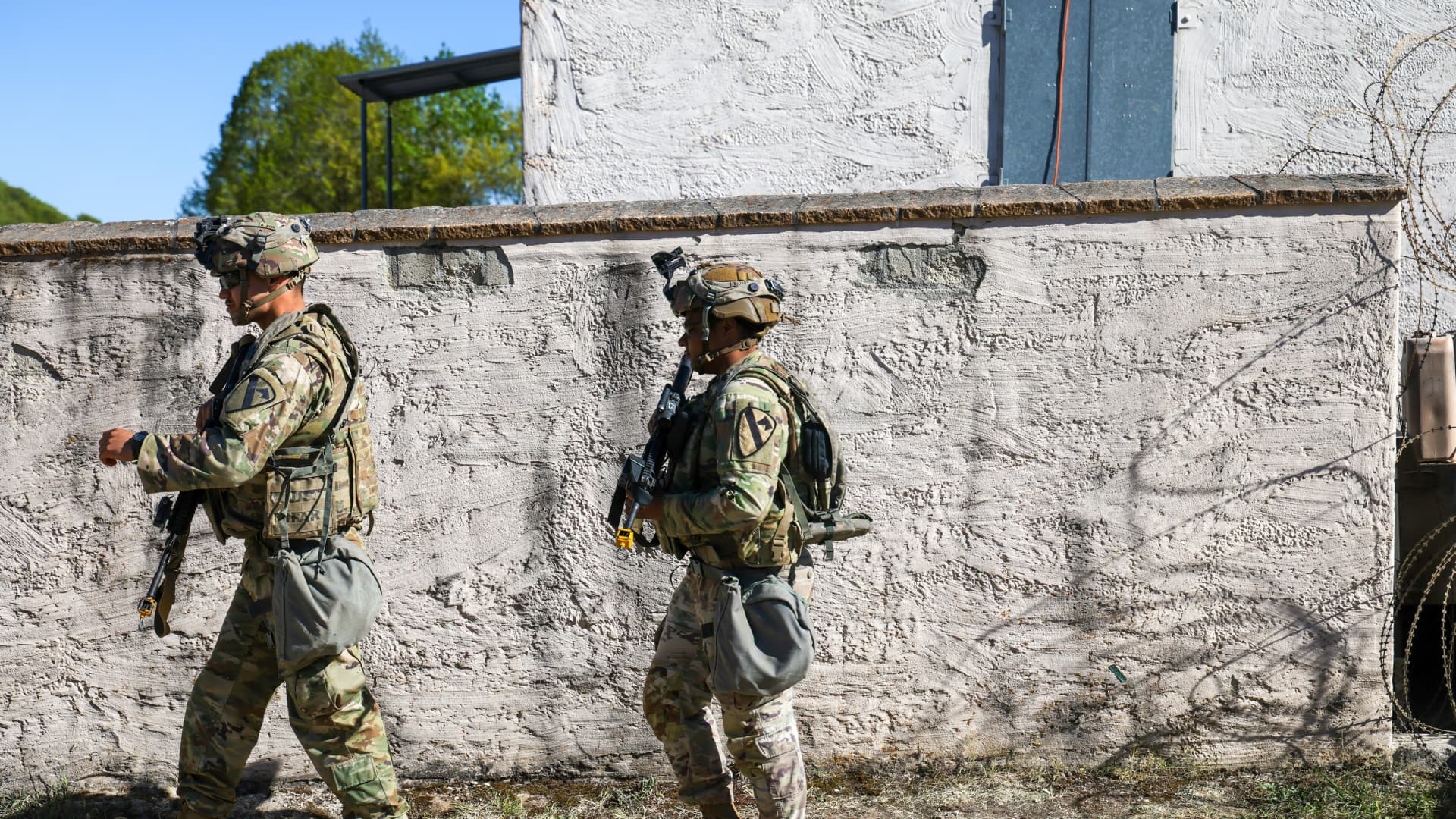
The United States will pull 5,000 soldiers from Germany, the Pentagon announced Friday, cutting its presence at what is America's largest military base in Europe. The move is a concrete step in a broader American shift away from heavy forward deployment on the continent.
Berlin has used the announcement to push harder for European countries to take greater responsibility for their own defense. The reduction gives German officials a tangible reason to press EU partners on burden-sharing, an argument that has gained urgency as U.S. commitment to European security becomes less predictable.
The withdrawal does not end the American military presence in Germany, but it signals a meaningful reduction in the scale of that footprint. Germany hosts a network of U.S. installations, and a cut of 5,000 troops represents a significant drawdown from its largest base on European soil.
For European NATO members, the practical consequence is pressure to fill a gap, whether through larger national armies, joint EU capabilities, or increased defense budgets. Countries that have relied on U.S. forces as a security backstop will need to reassess their own commitments.
Defense spending and procurement decisions across Europe could accelerate as a result. Governments that have debated increasing military budgets now face a clearer political argument for doing so. The shift may also strengthen calls for a more unified European defense structure, independent of direct U.S. troop presence.
The key question now is whether other European nations follow Germany's lead in treating this withdrawal as a catalyst for coordinated action, or whether the response remains fragmented and country-by-country.
Qatar's foreign ministry said mediators including Qatar, Pakistan, and Oman have reached "very progressive stages" in efforts to end the US-Iran war, pushing Brent crude down more than four percent.
Qatar confirmed it is mediating between the US and Iran but said no direct talks are currently planned. The clarification follows conflicting statements from President Trump, who claimed talks are under way, and Tehran, which denied any dialogue is happening.
Saudi Aramco reported sharply higher second-quarter 2026 profits as the Iran war restricts global oil supply and pushes crude prices up. Other oil supermajors also posted outsized earnings, raising concerns about sustained fuel cost pressure for importing economies.
President Trump called current Iran negotiations the "last chance" to end five months of conflict, pushing oil prices higher. Tehran denied formal talks are taking place, raising the risk of a diplomatic breakdown with direct consequences for global energy markets.