
Qatar Signals Progress in US-Iran War Talks
Qatar's foreign ministry said mediators including Qatar, Pakistan, and Oman have reached "very progressive stages" in efforts to end the US-Iran war, pushing Brent crude down more than four percent.
Key Takeaways
June 23, 2026 · 3 min read · By Rishabh Bhardwaj
·
AI-assisted, human-reviewed · Our editorial standards
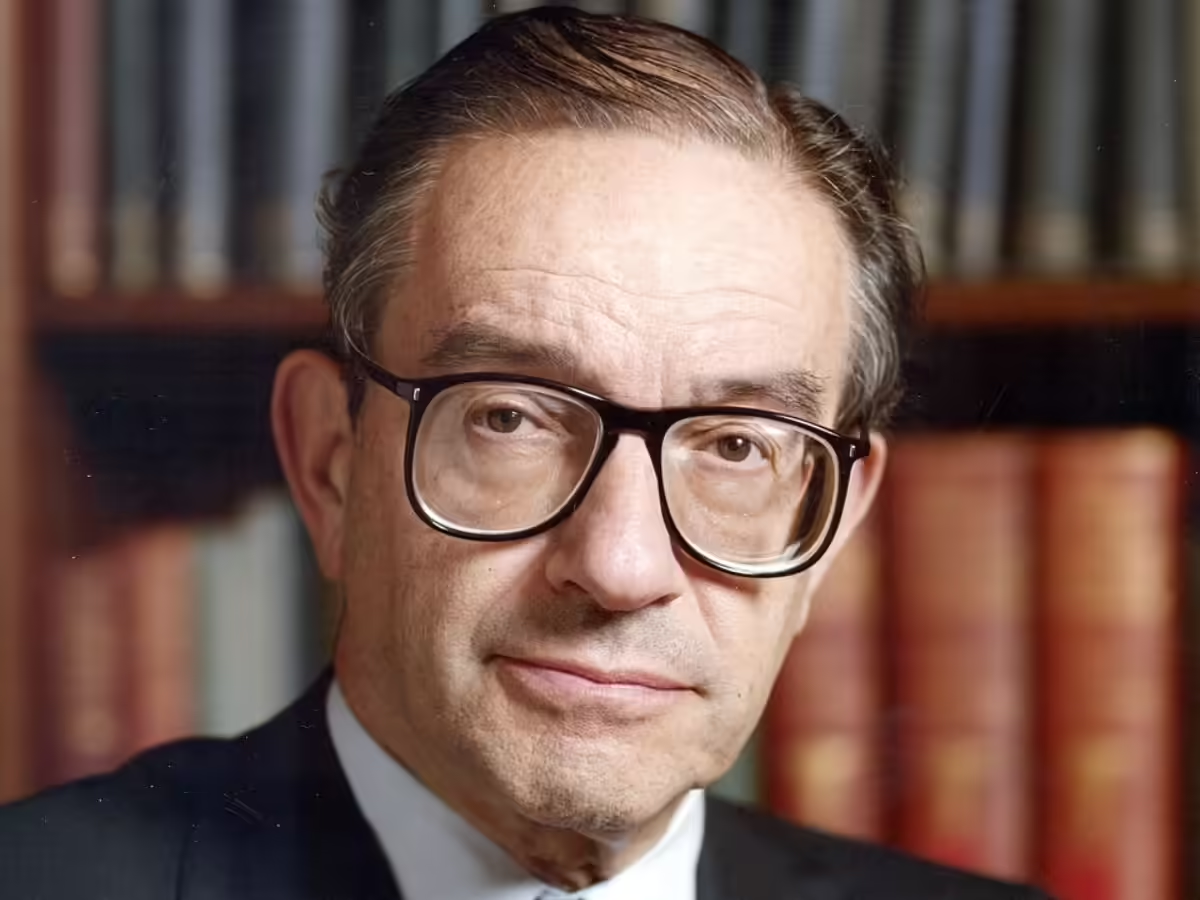
Alan Greenspan, who led the US Federal Reserve for nearly two decades and shaped modern central banking, has died at the age of 100.
Greenspan served as Fed chairman from 1987 to 2006, a stretch that covered some of the most turbulent and prosperous periods in American economic history. He was appointed by President Ronald Reagan and went on to serve under three more presidents: George H.W. Bush, Bill Clinton, and George W. Bush. That unusual continuity across administrations reflected the degree of confidence both parties placed in him.
His most celebrated moment came almost immediately after taking the job. When the US stock market crashed on October 19, 1987, now known as Black Monday, Greenspan moved quickly to reassure markets and inject liquidity into the financial system. The swift response helped contain what could have been a far deeper crisis and set the tone for how the Fed would handle market shocks under his watch.
Greenspan presided over the long economic expansion of the 1990s, a period of low inflation, falling unemployment, and surging productivity driven by the technology sector. He navigated the dot-com bust in the early 2000s by cutting interest rates aggressively, which helped cushion the blow from collapsing tech valuations. His ability to keep growth on track through multiple cycles earned him a reputation as a near-infallible steward of the economy.
But that reputation did not survive the 2008 global financial crisis intact. Critics, including many economists and lawmakers, argued that Greenspan kept interest rates too low for too long after the dot-com bust, helping to inflate the US housing bubble. His long-held belief that financial markets could largely regulate themselves also drew fire, as it contributed to a light-touch approach to oversight of the mortgage and derivatives markets that later proved catastrophic. In a rare public admission, Greenspan told Congress in 2008 that he had found a flaw in his ideology.
That moment of candor stood out precisely because it was unusual for a figure of his stature. For most of his tenure, Greenspan was known for deliberately opaque language when speaking publicly, a style so distinct it became known on Wall Street as "Fedspeak." His theory was that any clear signal from the Fed chair could move markets in unintended ways, so ambiguity was a tool of policy.
Greenspan's career defined how the world came to think about the Fed chairman's role. He made the position more visible and more consequential than it had been before, and his long run gave markets a sense of stability simply through his presence. The idea that a single central banker could manage confidence as much as interest rates owes much to how he operated.
His legacy is genuinely divided. On one side sits a record of sustained growth, low inflation, and effective crisis management during his peak years. On the other sits a regulatory philosophy that, in hindsight, left the financial system dangerously exposed. Most serious assessments of his tenure now hold both truths at once.
For markets, Greenspan's death is a moment of reflection rather than a near-term catalyst. He had been out of office for twenty years. But his era set the template for Fed communication, crisis response, and the enormous weight markets place on central bank signals, a template that his successors, including Ben Bernanke, Janet Yellen, and Jerome Powell, have each adapted in their own ways.
He was 100 years old.
Qatar's foreign ministry said mediators including Qatar, Pakistan, and Oman have reached "very progressive stages" in efforts to end the US-Iran war, pushing Brent crude down more than four percent.
Qatar confirmed it is mediating between the US and Iran but said no direct talks are currently planned. The clarification follows conflicting statements from President Trump, who claimed talks are under way, and Tehran, which denied any dialogue is happening.
Saudi Aramco reported sharply higher second-quarter 2026 profits as the Iran war restricts global oil supply and pushes crude prices up. Other oil supermajors also posted outsized earnings, raising concerns about sustained fuel cost pressure for importing economies.
President Trump called current Iran negotiations the "last chance" to end five months of conflict, pushing oil prices higher. Tehran denied formal talks are taking place, raising the risk of a diplomatic breakdown with direct consequences for global energy markets.