Swiggy's foreign ownership has dipped below 50% for the first time, landing at 49.76% of its total paid-up equity on a fully diluted basis, according to a regulatory filing by the company. The shift is part of a broader push by Swiggy to qualify as an Indian Owned and Controlled Company, a status that carries real commercial advantages in the quick commerce sector.
The drop in foreign shareholding has happened organically. Since Swiggy went public in November 2024, foreign entity shareholders have been steadily trimming their stakes by selling shares in the open market. The aggregate foreign investment figure covers foreign portfolio investment, foreign direct investment, and other indirect foreign investment categories combined.
Swiggy was careful to note that this shift does not change who controls the company. Ownership, management, voting rights, and business operations remain unchanged. The filing states that any material development on the IOCC front will be disclosed as required by law.
Why IOCC Status Matters for Quick Commerce
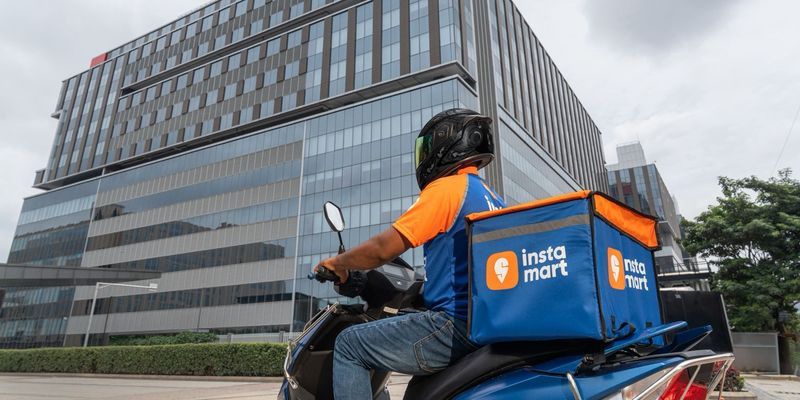
The Indian Owned and Controlled Company classification is not just a regulatory label. For Swiggy, it is the gateway to a structurally better business model in quick commerce. Under current rules, companies that qualify as IOCCs can allow their inventory-holding subsidiaries to own stock directly. For Swiggy's quick commerce arm Instamart, this would mean holding inventory rather than relying on third-party structures, which could tighten supply chain control and improve margins.
Swiggy tried to accelerate this process in May 2026 by seeking shareholder approval to amend its Articles of Association, the legal document governing how the company operates. That vote failed to get the required majority, leaving the IOCC goal unmet despite the favourable foreign ownership numbers now in place.
Ownership percentage crossing below 50% is a necessary condition for IOCC status, but it is not sufficient on its own. Swiggy still needs to meet other regulatory criteria, including satisfying control-related tests, which is why the company has explicitly said its ownership and control status has not yet changed.
A Wider Industry Pattern
Swiggy is not alone in chasing this status. Eternal, the parent company of Blinkit, passed a board resolution in April 2025 specifically capping foreign ownership at 49.5% to meet IOCC conditions. Fintech firm Paytm made a similar announcement in April 2026, saying it had become a majority Indian-owned company. The pattern suggests that IOCC qualification has become a strategic priority across consumer internet companies with large foreign investor bases, particularly those with quick commerce or regulated financial service operations where inventory ownership or licensing rules create competitive advantages for domestically classified firms.
Markets responded positively to Swiggy's filing. The stock rose 7.21% to close at Rs 266.27 on Tuesday, reflecting investor optimism that IOCC status could eventually unlock better unit economics for Instamart.
What to watch next: whether Swiggy puts the Articles of Association amendment back to shareholders with a revised approach, and whether the company formally applies for or receives IOCC recognition from the relevant regulatory authority. The May vote failure showed that large foreign institutional holders hold enough sway to block structural changes, so the path forward requires either their buy-in or a different legal mechanism. Any formal change in IOCC status will require a fresh disclosure under applicable law.