
Qatar Signals Progress in US-Iran War Talks
Qatar's foreign ministry said mediators including Qatar, Pakistan, and Oman have reached "very progressive stages" in efforts to end the US-Iran war, pushing Brent crude down more than four percent.
Key Takeaways
May 9, 2026 · 2 min read · By Rishabh Bhardwaj
·
AI-assisted, human-reviewed · Our editorial standards
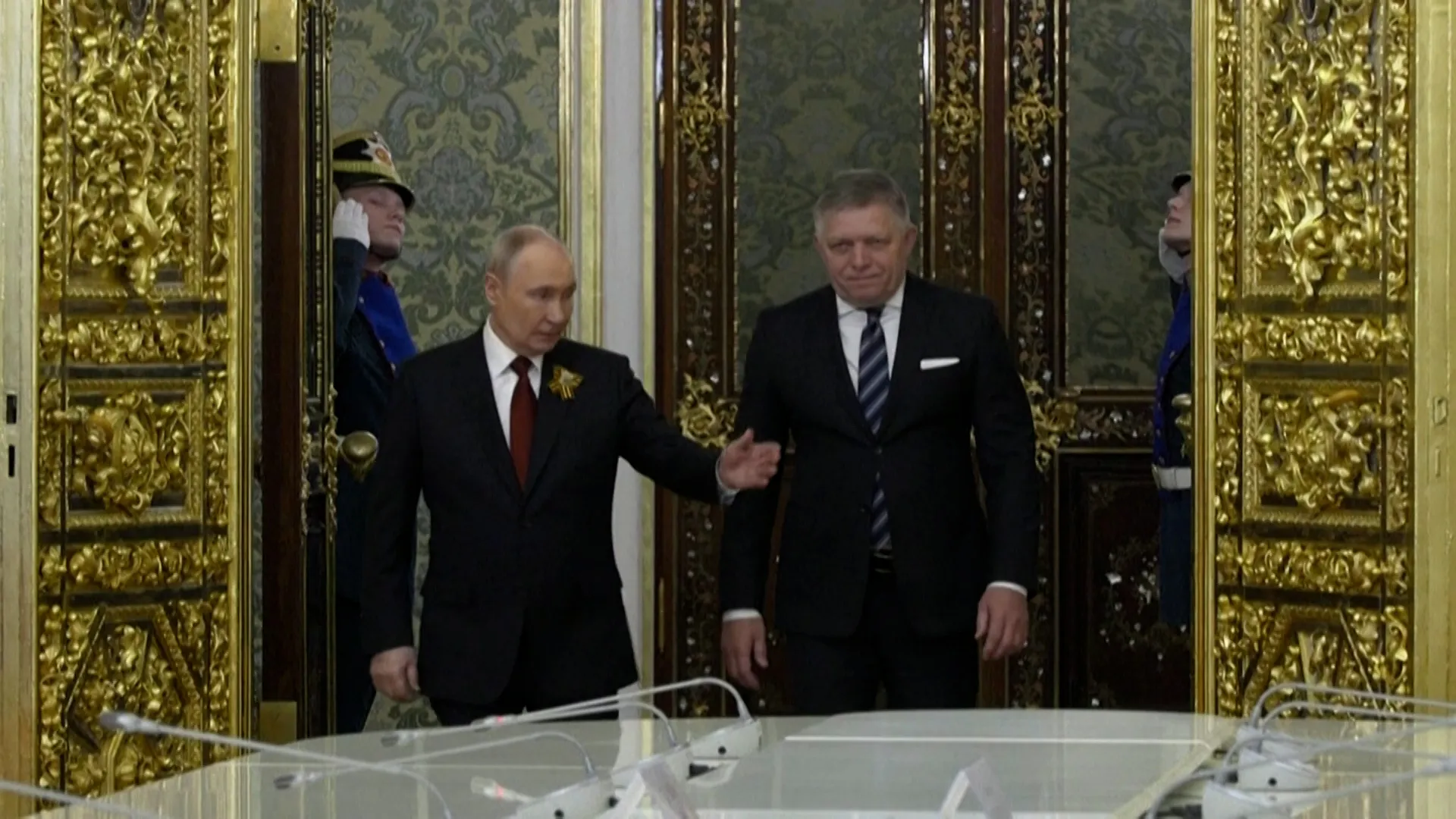
Russian President Vladimir Putin has said for the first time that he is willing to meet Ukrainian President Volodymyr Zelenskyy in a third country, marking a notable shift in his public position on direct talks.
Until now, Putin had consistently declined to engage with Zelenskyy face-to-face. The willingness to meet on neutral ground, outside Russia, is a departure from that stance, even if no venue, date, or agenda has been confirmed.
Direct talks between the two leaders have been effectively frozen since Russia's full-scale invasion of Ukraine in February 2022. Any signal of openness to a summit, however qualified, tends to move markets, affect weapons-supply diplomacy, and shape the calculations of mediating countries.
The framing matters here. Putin did not propose a specific meeting or set conditions publicly in this report. He said he is open to such a meeting, a signal, not a commitment. Diplomatic signals at this level are often tested through back channels before any formal step is taken.
The key variables now are whether Kyiv responds, which third country could host such a meeting, and whether any preconditions are attached. Ukraine has previously insisted that territorial integrity must underpin any negotiation framework. Russia has made its own demands around NATO expansion and Ukrainian sovereignty over disputed regions.
Mediating nations, including Turkey, which hosted earlier talks in 2022, and international bodies like the United Nations could re-enter the picture if both sides signal genuine interest. Any confirmed meeting would be the highest-level direct contact of the war.
For now, this remains a stated openness, not a scheduled event. But at this stage of the conflict, even a shift in rhetoric from Putin is treated as a meaningful data point by governments, markets, and military planners watching the war's trajectory.
Qatar's foreign ministry said mediators including Qatar, Pakistan, and Oman have reached "very progressive stages" in efforts to end the US-Iran war, pushing Brent crude down more than four percent.
Qatar confirmed it is mediating between the US and Iran but said no direct talks are currently planned. The clarification follows conflicting statements from President Trump, who claimed talks are under way, and Tehran, which denied any dialogue is happening.
Saudi Aramco reported sharply higher second-quarter 2026 profits as the Iran war restricts global oil supply and pushes crude prices up. Other oil supermajors also posted outsized earnings, raising concerns about sustained fuel cost pressure for importing economies.
President Trump called current Iran negotiations the "last chance" to end five months of conflict, pushing oil prices higher. Tehran denied formal talks are taking place, raising the risk of a diplomatic breakdown with direct consequences for global energy markets.