Prime Minister Narendra Modi publicly accused opposition parties of blocking women's empowerment legislation, framing the stall as politically motivated rather than substantive. Speaking in a national address, Modi said the 'fight for women has been stalled' due to what he called the selfish politics of opposition parties. The remarks signal an escalation in the political battle over a women's reservation bill, a measure that has historically faced resistance across party lines in parliament. Modi's framing places blame squarely on opposition obstruction, a posture designed to position the ruling party as the primary advocate for gender-based legislative reform. The bill's fate depends on parliamentary consensus, which has proven elusive. Observers will watch whether the address pressures opposition parties into a negotiating posture or hardens factional lines ahead of any upcoming legislative session. The statement also serves a broader electoral signaling function, given the salience of women voters in recent Indian state and national elections.
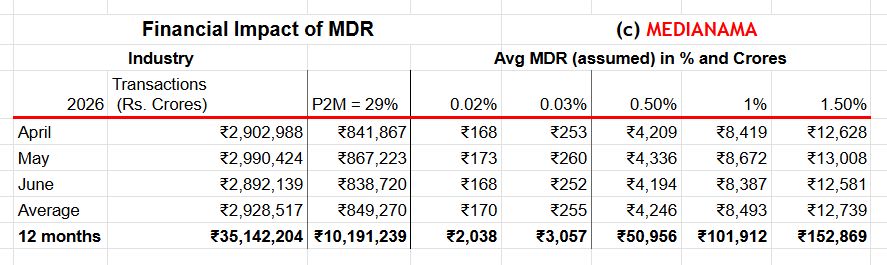
India's government plans to amend the Payment and Settlement Systems Act to restore UPI merchant discount rates, ending the zero-MDR regime in place since January 2020.
India's government has introduced the Taxation and Other Laws (Amendment) Bill, 2026, proposing changes to payments regulation, income tax, and the Finance Act to attract FDI and support Make in India. The Bill's final shape will depend on parliamentary debate and committee review.
The government's Taxation and Other Laws (Amendment) Bill, 2026, proposes to replace the blanket UPI MDR ban with a system allowing the Centre to notify which payment modes stay fee-free.
Prime Minister Narendra Modi inaugurated the Rs 5,000 crore Bhogapuram greenfield airport in Andhra Pradesh, built under a public-private partnership model. He also laid foundation stones for infrastructure projects worth nearly Rs 18,000 crore in the state, signalling a broad investment push for the region.