South Africa's governing coalition faces a structural problem that traditional parties cannot easily paper over: provincial governments are failing in ways that are visibly eroding the electoral base of the ANC, DA, and their historic allies. Where service delivery collapses, water, electricity, health infrastructure, voters are not returning to established parties; they are either abstaining or migrating to newer, protest-oriented formations. The mechanism is straightforward: provincial governments serve as the primary delivery interface between national policy and citizens, and repeated failure at that level destroys brand trust faster than any national messaging can repair it. Parties built on provincial strongholds, the ANC in Limpopo and the Eastern Cape, the DA in the Western Cape, are exposed differently but equivalently to this dynamic. The near-term electoral risk is concentrated in upcoming by-elections and the 2026 local government cycle, where low turnout and fragmented protest votes could structurally realign municipal councils. What to watch: whether deteriorating provinces trigger internal party accountability mechanisms or simply accelerate defection to EFF, MK Party, and independent candidates.
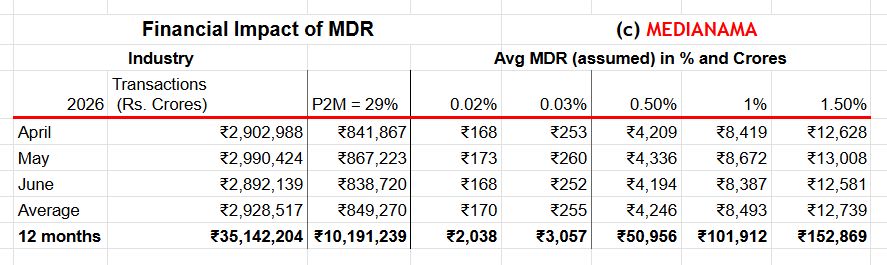
India's government plans to amend the Payment and Settlement Systems Act to restore UPI merchant discount rates, ending the zero-MDR regime in place since January 2020.
India's government has introduced the Taxation and Other Laws (Amendment) Bill, 2026, proposing changes to payments regulation, income tax, and the Finance Act to attract FDI and support Make in India. The Bill's final shape will depend on parliamentary debate and committee review.
The government's Taxation and Other Laws (Amendment) Bill, 2026, proposes to replace the blanket UPI MDR ban with a system allowing the Centre to notify which payment modes stay fee-free.
Prime Minister Narendra Modi inaugurated the Rs 5,000 crore Bhogapuram greenfield airport in Andhra Pradesh, built under a public-private partnership model. He also laid foundation stones for infrastructure projects worth nearly Rs 18,000 crore in the state, signalling a broad investment push for the region.