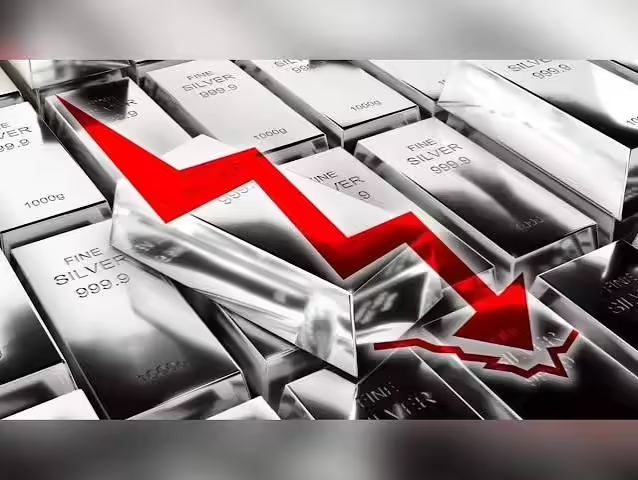
Silver prices have dropped 14% this week, falling to a seven-month low as fading expectations of US Federal Reserve rate cuts and rising bond yields pull investors away from the metal. The selloff has been sharp enough to push silver below half its all-time high set in January 2026.
The core driver is a shift in interest rate expectations. When bond yields rise, fixed-income assets become more attractive relative to metals that pay no interest or dividend. Investors who held silver partly as a hedge against loose monetary policy are now reassessing that position as the Fed shows little urgency to cut rates.
Silver has two roles in markets: it is both a financial asset and an industrial metal. That dual identity can work against it in a risk-off environment. When investors want safety but also expect higher real yields, gold tends to hold up better because its market is driven almost entirely by financial flows. Silver's industrial component, which ties it to manufacturing and electronics demand, makes it more vulnerable to growth concerns that often accompany a tighter monetary outlook.
Why the selloff accelerated this week
Cooling geopolitical tensions have compounded the pressure. Safe-haven demand, which had supported prices earlier in 2026 when global uncertainty was elevated, has eased as diplomatic signals improved. That removed a second pillar holding silver up. When both the rate-cut thesis and the safe-haven thesis weaken at the same time, metals prices can move fast, and this week's 14% drop reflects exactly that.
Rising bond yields also strengthen the US dollar, which adds a third layer of pressure. Silver, like most commodities, is priced in dollars globally. A stronger dollar makes it more expensive for buyers in other currencies, which dampens demand and pushes prices lower in dollar terms.
The January all-time high now looks like a distant reference point. Silver is currently trading at less than half of those levels, a reminder of how quickly sentiment-driven rallies can reverse when the macro environment shifts. That January high was built on a combination of Fed pivot hopes, elevated geopolitical risk, and strong speculative positioning. All three of those tailwinds have now softened or reversed.
What investors and markets are watching next
The most important near-term signal will be US Federal Reserve communication. Any shift in tone toward rate cuts, or softer-than-expected economic data that brings cuts back into view, could stabilize silver quickly. The metal tends to recover sharply when rate expectations turn dovish because speculative and institutional money re-enters fast.
Industrial demand is the other variable to track. Silver is used heavily in solar panels, semiconductors, and electric vehicle components. If manufacturing data from the US, China, or Europe surprises to the upside, it could provide a floor for prices independent of the financial market dynamics driving this week's move.
For now, the balance of forces is against silver. Higher yields, a firmer dollar, reduced safe-haven buying, and fading rate-cut optimism are all pointing the same direction. Traders will be watching whether the 14% weekly drop stabilizes at current levels or whether further selling emerges if yields continue to climb. A decisive break lower from here could test the conviction of longer-term holders who bought during the 2025-2026 rally.
The speed and scale of this week's move also raises a question about positioning. When a market falls 14% in a week, it often signals that leveraged or speculative holders are exiting quickly rather than a fundamental collapse in the asset's value. That kind of positioning flush can sometimes mark a short-term low, though the macro headwinds would need to turn for a sustained recovery to take hold.