EU Ambassador Raimundas Karoblis has explicitly conditioned Pakistan's continued GSP+ trade access on measurable human rights progress, naming blasphemy cases, enforced disappearances, minority rights, and the Prevention of Electronic Crimes Act as four areas requiring concrete action. GSP+ grants Pakistan preferential tariff access to the EU market, Pakistan's single largest export destination, making the stakes directly material for the country's trade revenues and industrial base. Karoblis framed the conditions not as external interference but as obligations Pakistan assumed by ratifying United Nations conventions, a legal grounding that narrows Islamabad's room to push back diplomatically. The warning came ahead of the High-Level EU-Pakistan Business Forum on April 28-29, where senior policymakers, business leaders, and EU financial institutions are expected to discuss investment in agri-business, fintech, green logistics, textiles, and responsible mining under the EU's Global Gateway initiative. The juxtaposition of rights pressure with investment outreach signals that Brussels is running a two-track strategy: expanding economic engagement while hardening the compliance bar. Pakistan's textile and apparel exporters, heavily reliant on GSP+ margins, face the clearest downside risk if progress is deemed insufficient at the next review.
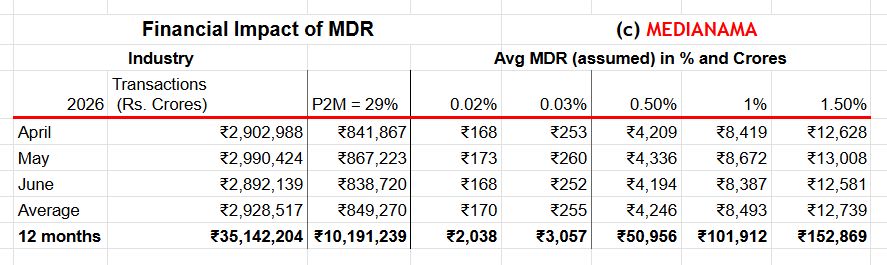
India's government plans to amend the Payment and Settlement Systems Act to restore UPI merchant discount rates, ending the zero-MDR regime in place since January 2020.
India's government has introduced the Taxation and Other Laws (Amendment) Bill, 2026, proposing changes to payments regulation, income tax, and the Finance Act to attract FDI and support Make in India. The Bill's final shape will depend on parliamentary debate and committee review.
The government's Taxation and Other Laws (Amendment) Bill, 2026, proposes to replace the blanket UPI MDR ban with a system allowing the Centre to notify which payment modes stay fee-free.
Prime Minister Narendra Modi inaugurated the Rs 5,000 crore Bhogapuram greenfield airport in Andhra Pradesh, built under a public-private partnership model. He also laid foundation stones for infrastructure projects worth nearly Rs 18,000 crore in the state, signalling a broad investment push for the region.