
Qatar Signals Progress in US-Iran War Talks
Qatar's foreign ministry said mediators including Qatar, Pakistan, and Oman have reached "very progressive stages" in efforts to end the US-Iran war, pushing Brent crude down more than four percent.
Key Takeaways
May 12, 2026 · 3 min read · By Rishabh Bhardwaj
·
AI-assisted, human-reviewed · Our editorial standards
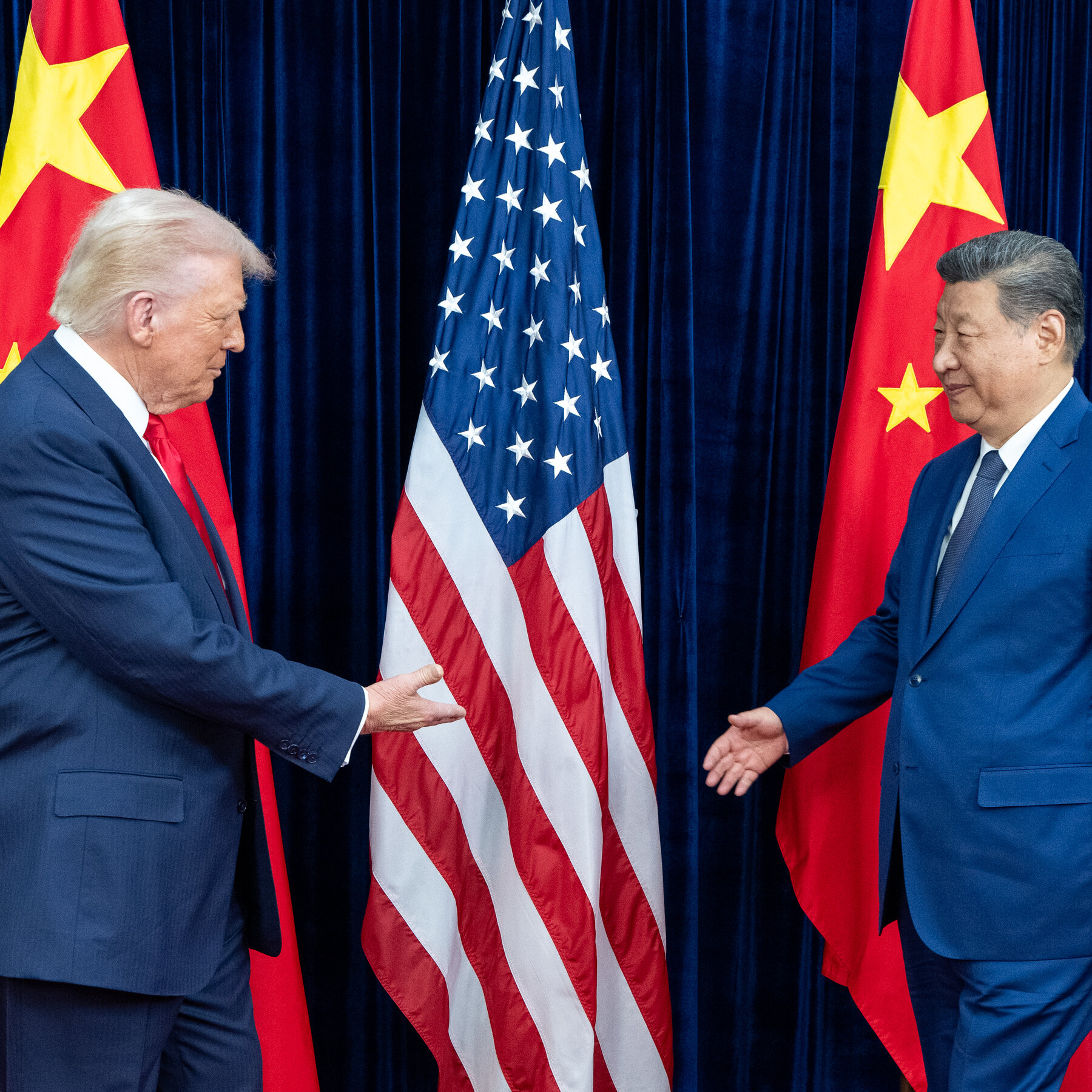
Donald Trump and Xi Jinping are heading into a high-stakes bilateral meeting with less room to maneuver than either side had hoped. A war involving Iran has absorbed political attention and diplomatic bandwidth in both Washington and Beijing, narrowing the agenda and cooling expectations for any meaningful breakthrough on the deeper tensions between the two powers.
The meeting was originally framed as an opportunity to begin stabilizing a relationship strained by trade disputes, technology restrictions, competing claims in the South China Sea, and disagreements over Taiwan. Those issues remain unresolved. But the conflict involving Iran has pushed both governments into reactive mode, making it harder to pursue the kind of patient, structured diplomacy that large bilateral negotiations require.
For the United States, an active war involving Iran demands military coordination, alliance management, and domestic political attention. That leaves the White House with less political capital and fewer senior officials available to drive a complex China agenda. For Beijing, Iran is a significant trading partner and part of its broader effort to build influence across the Middle East. How China is seen to respond to the conflict carries consequences for its relationships across the region and with Russia.
Both governments are therefore walking into this summit with one eye on a crisis they did not fully plan for. That is a poor condition for resolving anything structural. Leaders in this position tend to protect existing positions rather than offer concessions, and their negotiators are unlikely to have received fresh mandates to move on sensitive files.
The result is a summit defined more by what it will not accomplish than by what it might. Both sides appear to be managing the relationship rather than reshaping it. The goal shifts from progress to stability: keep communication open, avoid an accidental escalation, and signal to markets and allies that the two largest economies are not heading toward open confrontation.
Investors watching for tariff relief, technology export controls, or a thaw in financial restrictions are unlikely to get clear answers from this meeting. The compressed agenda means fewer working-level agreements will be ready to announce. Any joint statement is likely to be general in tone, focused on shared commitments to dialogue rather than specific policy changes.
For businesses operating across both economies, particularly in semiconductors, electric vehicles, and advanced manufacturing, the absence of progress extends uncertainty. Supply chain decisions that depend on knowing where tariffs or export rules will land in twelve months remain difficult to make with confidence.
The diplomatic channel itself still has value. A meeting at the leader level keeps the line open and signals that neither side wants a rupture. In a period when both are preoccupied with other crises, simply not making things worse is a real outcome, even if it is not a satisfying one.
What to watch after the summit is whether working groups on specific issues, trade, fentanyl, military communications, are restarted or assigned new deadlines. Those lower-level mechanisms are often where real progress happens, and their presence or absence in any post-summit readout will say more than the joint statement itself.
For now, a meeting that began with reduced ambitions will likely end with reduced results. The deeper structural questions between the United States and China, who controls critical technology, who sets rules for trade in the Indo-Pacific, how Taiwan is handled, remain parked. They will return to the agenda, but probably not until both governments have more bandwidth to deal with them.
Qatar's foreign ministry said mediators including Qatar, Pakistan, and Oman have reached "very progressive stages" in efforts to end the US-Iran war, pushing Brent crude down more than four percent.
Qatar confirmed it is mediating between the US and Iran but said no direct talks are currently planned. The clarification follows conflicting statements from President Trump, who claimed talks are under way, and Tehran, which denied any dialogue is happening.
Saudi Aramco reported sharply higher second-quarter 2026 profits as the Iran war restricts global oil supply and pushes crude prices up. Other oil supermajors also posted outsized earnings, raising concerns about sustained fuel cost pressure for importing economies.
President Trump called current Iran negotiations the "last chance" to end five months of conflict, pushing oil prices higher. Tehran denied formal talks are taking place, raising the risk of a diplomatic breakdown with direct consequences for global energy markets.