The Bombay High Court has directed the Central Government to decide by May 4 on a PIL seeking a posthumous Padma Vibhushan for Khashaba Dadasaheb Jadhav, India's first individual Olympic medalist. The petition was filed by the Kusteeveer Khashaba Jadhav Foundation, led by his son Ranjeet Jadhav, pressing the government to formally recognize the wrestler's historic contribution to Indian sport. Jadhav won a bronze medal in freestyle wrestling at the 1952 Helsinki Olympics, becoming the first Indian to secure an individual Olympic medal in independent India. Despite this landmark achievement, he has not received the Padma Vibhushan, India's second-highest civilian honor. The court's deadline compels the Centre to take a position rather than allow the petition to languish administratively. The outcome will signal how the government approaches posthumous civilian honors for pioneering athletes and could set a precedent for similar recognition campaigns tied to underacknowledged sporting figures from earlier eras.
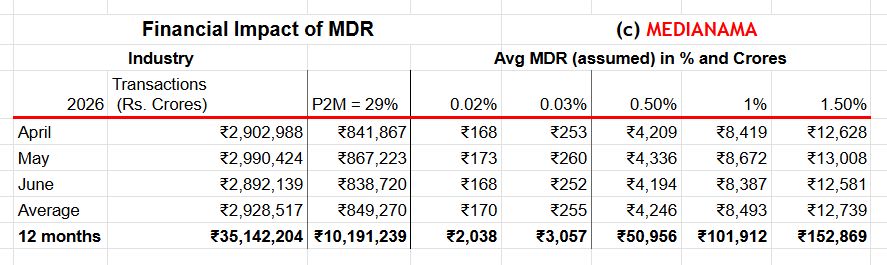
India's government plans to amend the Payment and Settlement Systems Act to restore UPI merchant discount rates, ending the zero-MDR regime in place since January 2020.
India's government has introduced the Taxation and Other Laws (Amendment) Bill, 2026, proposing changes to payments regulation, income tax, and the Finance Act to attract FDI and support Make in India. The Bill's final shape will depend on parliamentary debate and committee review.
The government's Taxation and Other Laws (Amendment) Bill, 2026, proposes to replace the blanket UPI MDR ban with a system allowing the Centre to notify which payment modes stay fee-free.
Prime Minister Narendra Modi inaugurated the Rs 5,000 crore Bhogapuram greenfield airport in Andhra Pradesh, built under a public-private partnership model. He also laid foundation stones for infrastructure projects worth nearly Rs 18,000 crore in the state, signalling a broad investment push for the region.