
Qatar Signals Progress in US-Iran War Talks
Qatar's foreign ministry said mediators including Qatar, Pakistan, and Oman have reached "very progressive stages" in efforts to end the US-Iran war, pushing Brent crude down more than four percent.
Key Takeaways
June 28, 2026 · 4 min read · By Rishabh Bhardwaj
·
AI-assisted, human-reviewed · Our editorial standards
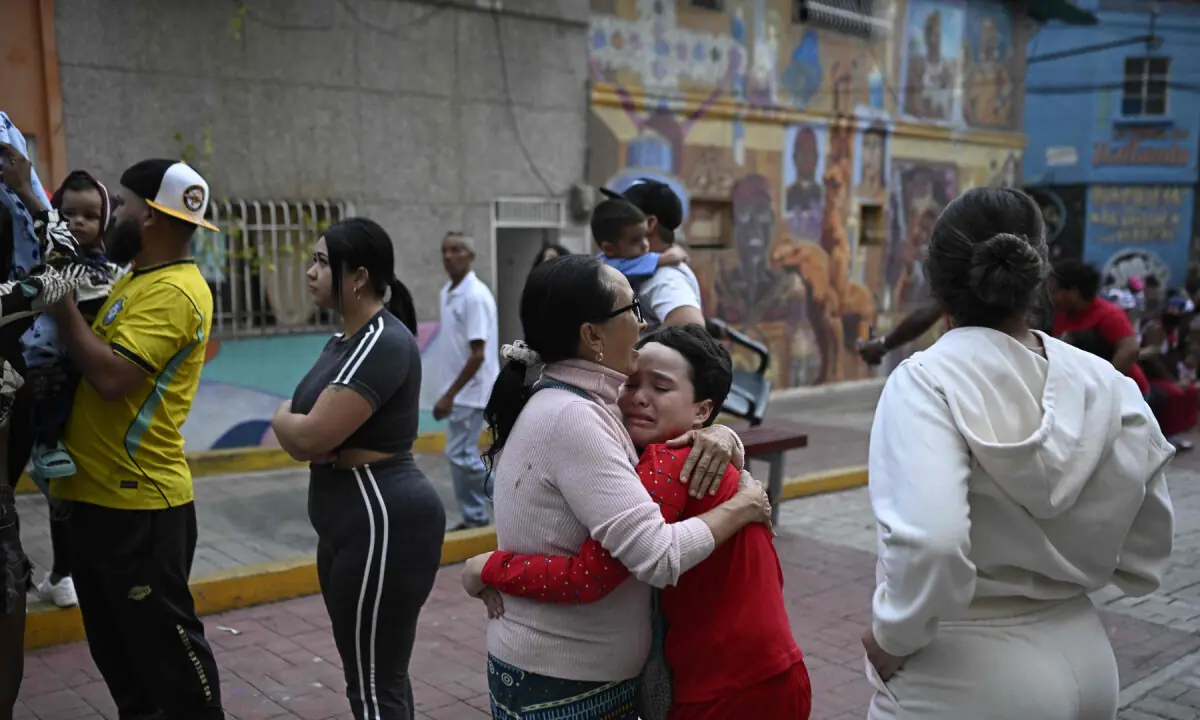
A pair of massive earthquakes struck Venezuela on Wednesday evening, killing at least 164 people and injuring 971 more, according to interim president Delcy Rodriguez. The quakes, registering magnitudes of 7.2 and 7.5, hit roughly 160 kilometres west of Caracas in rapid succession, with less than a minute between them. It is the most powerful seismic event in the country since 1900.
The US Geological Survey (USGS) confirmed the 7.5-magnitude tremor was Venezuela's strongest earthquake since a 7.7-magnitude quake struck offshore on October 29, 1900. The USGS initially warned that "high casualties and extensive damage are probable" and that the disaster was "likely widespread," estimating fatalities could range from 10,000 to 100,000. The confirmed death toll of 164, while still rising, remains far below that upper estimate, though rescue operations are ongoing and many people remain trapped under rubble.
Rodriguez declared a state of emergency as buildings in the capital crumbled and the country's main airport was forced to close. She identified La Guaira, a coastal city near Caracas, as the hardest-hit region. Around 30 aftershocks have been recorded since the two main quakes struck at approximately 6pm local time on Wednesday, a public holiday marking an 1821 military victory over Spanish rule.
Emergency crews and local residents searched through collapsed structures after dark. Interior Minister Diosdado Cabello confirmed on state television that buildings and homes had collapsed across affected areas, with fire departments and police fully activated. In Chacao, an eastern Caracas municipality, Mayor Gustavo Duque told broadcaster Globovision that two structures had collapsed and at least 16 people were injured, with deaths also reported in the area.
Residents described scenes of sudden chaos. Astrid Ramirez, a 41-year-old publicist in western Caracas, said screaming broke out the moment shaking began. Coro Martinez, 56, in eastern Caracas, said household objects were thrown around her home. Maria Romero, an 80-year-old pensioner in southern Caracas who lived through the deadly 1967 magnitude 6.3 earthquake that also struck the city, said Wednesday's event was worse. At least one resident said a phone alert gave her a few seconds of warning before the stronger shaking hit.
Caracas' Hospital de Clinicas asked staff to double overnight shifts to manage the surge in patients. Video from inside the hospital showed ceiling panels hanging loose and plaster scattered across floors, indicating the building itself suffered damage during the quakes. Elsewhere, fire trucks moved through city streets responding to structural collapses, and social media footage appeared to show significant damage at Venezuela's main airport, though that footage had not been independently verified as of Thursday.
The US Tsunami Warning System initially issued a tsunami threat for Puerto Rico, the US and British Virgin Islands, and said hazardous waves could also affect Aruba, Curacao, and Bonaire. The warning was withdrawn roughly an hour later after no significant tsunami activity was confirmed.
Venezuela sits in a seismically active zone at the boundary of the Caribbean Plate and the South American Plate. The country has a long record of damaging earthquakes: an estimated 30,000 people died when a major quake devastated Merida and Caracas in 1812, according to the USGS. Wednesday's event is the latest reminder of the region's persistent seismic vulnerability.
Rodriguez has been running Venezuela since US President Nicolas Maduro was removed from power in January 2026, and she has moved toward a more cooperative relationship with the United States on oil, mining, and other industries. US President Donald Trump said on Truth Social that the quakes had "left a devastating number of deaths" and that the United States was "ready, willing, and able to help," instructing government agencies to prepare to respond. The US embassy in Caracas urged American citizens in Venezuela to seek secure shelter and stay away from damaged structures.
Some Caracas municipalities have cancelled classes and local events through Monday as authorities assess the full scale of destruction. With aftershocks continuing and search-and-rescue operations still active across multiple collapse sites, the death toll is expected to climb in the coming days.
Qatar's foreign ministry said mediators including Qatar, Pakistan, and Oman have reached "very progressive stages" in efforts to end the US-Iran war, pushing Brent crude down more than four percent.
Qatar confirmed it is mediating between the US and Iran but said no direct talks are currently planned. The clarification follows conflicting statements from President Trump, who claimed talks are under way, and Tehran, which denied any dialogue is happening.
Saudi Aramco reported sharply higher second-quarter 2026 profits as the Iran war restricts global oil supply and pushes crude prices up. Other oil supermajors also posted outsized earnings, raising concerns about sustained fuel cost pressure for importing economies.
President Trump called current Iran negotiations the "last chance" to end five months of conflict, pushing oil prices higher. Tehran denied formal talks are taking place, raising the risk of a diplomatic breakdown with direct consequences for global energy markets.