
Qatar Signals Progress in US-Iran War Talks
Qatar's foreign ministry said mediators including Qatar, Pakistan, and Oman have reached "very progressive stages" in efforts to end the US-Iran war, pushing Brent crude down more than four percent.
Key Takeaways
May 31, 2026 · 3 min read · By Rishabh Bhardwaj
·
AI-assisted, human-reviewed · Our editorial standards
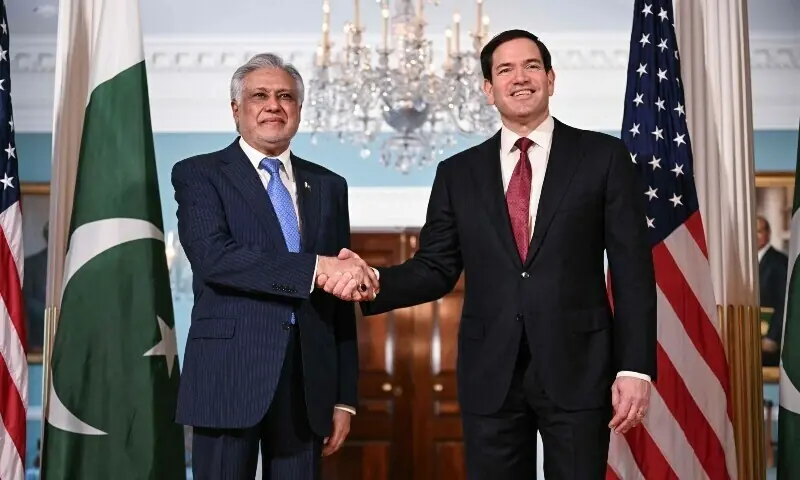
Pakistan's Deputy Prime Minister and Foreign Minister Ishaq Dar will meet US Secretary of State Marco Rubio in Washington on Friday, the Foreign Ministry confirmed Thursday. The talks will cover bilateral relations and regional developments, with Pakistan positioning itself as a diplomatic bridge at a moment of high geopolitical tension.
The visit carries particular weight given the active conflict involving the United States, Israel, and Iran. Islamabad is currently working to broker a peace arrangement aimed at permanently ending that war, and Dar's Washington stop appears directly connected to those efforts. Pakistan has framed the engagement around promoting regional peace through dialogue, a posture that places it in contact with multiple parties simultaneously.
Rubio holds a dual role as both Secretary of State and National Security Advisor, meaning the conversation with Dar covers both diplomatic and security dimensions in a single meeting. That combination gives the exchange an unusual breadth, touching on foreign policy priorities as well as direct national security concerns for Washington.
The Foreign Ministry's language points in two directions at once. On one hand, Islamabad wants to reinforce its standing as a long-term US partner, describing the visit as reflecting a commitment to a "longstanding and broad-based partnership." On the other, it is flagging a specific regional role it wants recognition for: acting as a mediator or facilitator in the Iran situation.
The statement also mentioned strengthening cooperation in unspecified priority sectors. Pakistan's relationship with Washington typically involves security cooperation, economic support, and access to international financial institutions. Any signal from this meeting about those tracks would carry concrete consequences for Islamabad's fiscal position, which remains under pressure.
Pakistan meeting the top US diplomat during an active regional conflict is not routine. Islamabad sits at the intersection of several pressure points: its geographic proximity to Iran, its own relationships across the Middle East, and its ongoing dependence on a stable relationship with Washington for economic and strategic support.
If Pakistan's peace mediation role gains any traction with Rubio, it could elevate Islamabad's diplomatic standing at a moment when it badly needs international goodwill. A positive signal from Washington could also ease pressure in multilateral forums where Pakistan's economic reform program is under scrutiny.
Dar is expected to depart Washington for Islamabad the same day after completing his engagements, suggesting this is a focused, high-priority visit rather than a broader diplomatic tour.
What to watch: whether the two sides issue a joint readout after the meeting, what specific sectors are named in any follow-up statement, and whether Pakistan's mediation efforts on the Iran conflict receive any public endorsement from the US side.
Qatar's foreign ministry said mediators including Qatar, Pakistan, and Oman have reached "very progressive stages" in efforts to end the US-Iran war, pushing Brent crude down more than four percent.
Qatar confirmed it is mediating between the US and Iran but said no direct talks are currently planned. The clarification follows conflicting statements from President Trump, who claimed talks are under way, and Tehran, which denied any dialogue is happening.
Saudi Aramco reported sharply higher second-quarter 2026 profits as the Iran war restricts global oil supply and pushes crude prices up. Other oil supermajors also posted outsized earnings, raising concerns about sustained fuel cost pressure for importing economies.
President Trump called current Iran negotiations the "last chance" to end five months of conflict, pushing oil prices higher. Tehran denied formal talks are taking place, raising the risk of a diplomatic breakdown with direct consequences for global energy markets.