India's Cabinet approved a 2% increase in Dearness Allowance for central government employees and pensioners, lifting DA to a revised rate that directly raises monthly take-home pay across the federal workforce. The decision was announced Saturday and takes effect for a large cohort of salaried and retired central government beneficiaries. DA is a cost-of-living adjustment indexed to inflation, recalibrated periodically by the government to preserve real purchasing power for employees on fixed pay scales. The revision adds to the aggregate wage bill for the central government, with fiscal implications dependent on the total headcount of eligible employees and pensioners. Markets and analysts will watch whether the consumption boost from higher disposable income offsets any pressure on the fiscal deficit. Future DA revisions will hinge on underlying inflation data, making the next CPI reading a practical signal for the trajectory of further adjustments.
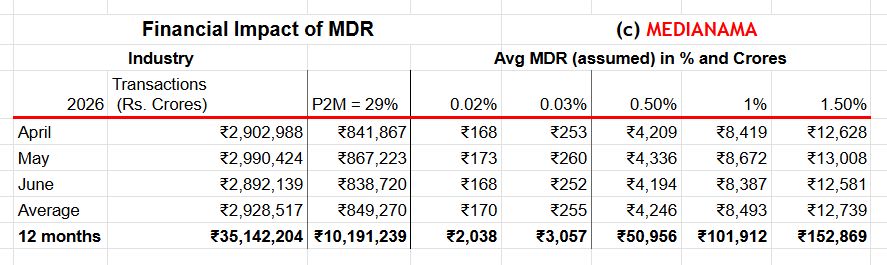
India's government plans to amend the Payment and Settlement Systems Act to restore UPI merchant discount rates, ending the zero-MDR regime in place since January 2020.
India's government has introduced the Taxation and Other Laws (Amendment) Bill, 2026, proposing changes to payments regulation, income tax, and the Finance Act to attract FDI and support Make in India. The Bill's final shape will depend on parliamentary debate and committee review.
The government's Taxation and Other Laws (Amendment) Bill, 2026, proposes to replace the blanket UPI MDR ban with a system allowing the Centre to notify which payment modes stay fee-free.
Prime Minister Narendra Modi inaugurated the Rs 5,000 crore Bhogapuram greenfield airport in Andhra Pradesh, built under a public-private partnership model. He also laid foundation stones for infrastructure projects worth nearly Rs 18,000 crore in the state, signalling a broad investment push for the region.