Pakistan's consumer prices rose 11.7 per cent year-on-year in May, pushing household costs well above the government's 7 per cent full-year target and signalling that inflation pressures are broadening rather than easing.
The headline reading, measured by the Consumer Price Index, was driven primarily by energy and transport costs. Transport charges surged 36.78 per cent year-on-year, the single sharpest category jump in the data. Housing, water, electricity, gas and fuels climbed 16.78 per cent, while non-perishable food items rose 9.42 per cent. Food inflation overall reached 6.5 per cent in urban areas and 8.5 per cent in rural areas on an annual basis.
The central driver is energy supply. The Strait of Hormuz, through which most of Pakistan's energy imports pass, remains blocked. Prime Minister Shehbaz Sharif has acknowledged that the weekly oil import bill has risen significantly as a result. While energy prices were marginally revised downward in May, the relief was too small to meaningfully move the overall index. Motor fuel prices alone rose 7.62 per cent month-on-month in urban areas.
Inflation is now running well above last year's pace
The cumulative average inflation for the first eleven months of fiscal year 2026 (July to May) stood at 6.69 per cent, up from 4.61 per cent in the same period last year. That acceleration is notable because it comes despite a high base effect, meaning last year's elevated prices were already making year-on-year comparisons harder to beat. The fact that inflation is still climbing faster points to genuinely new price pressure, not just a statistical quirk.
Urban inflation ran slightly hotter than rural, at 11.8 per cent versus 11.5 per cent annually. On a month-on-month basis, urban prices rose 0.7 per cent in May, more than double the 0.3 per cent increase in rural areas. Non-food inflation is the clearest stress point: it reached 15.2 per cent in urban areas and 14.2 per cent in rural regions, driven by a mix of fuel costs, transport services, and supply-chain pressures feeding into manufactured goods.
Core inflation, which strips out volatile food and energy to give a cleaner read on underlying price trends, came in at 9 per cent in urban areas and 8.4 per cent in rural areas. A core reading this high tells the State Bank of Pakistan that price pressures are not confined to external supply shocks. They are spreading through the broader economy.
The State Bank has already moved, but the pressure is not easing
The State Bank of Pakistan raised its benchmark policy rate to 11.50 per cent on April 27, up from 10.50 per cent where it had been held for nearly two years. The rate hike was a direct response to rising inflation. Higher rates make borrowing more expensive, which is intended to slow spending and cool prices. But with energy costs driven by an external blockage rather than domestic demand, monetary policy alone has limited reach over the near-term inflation path.
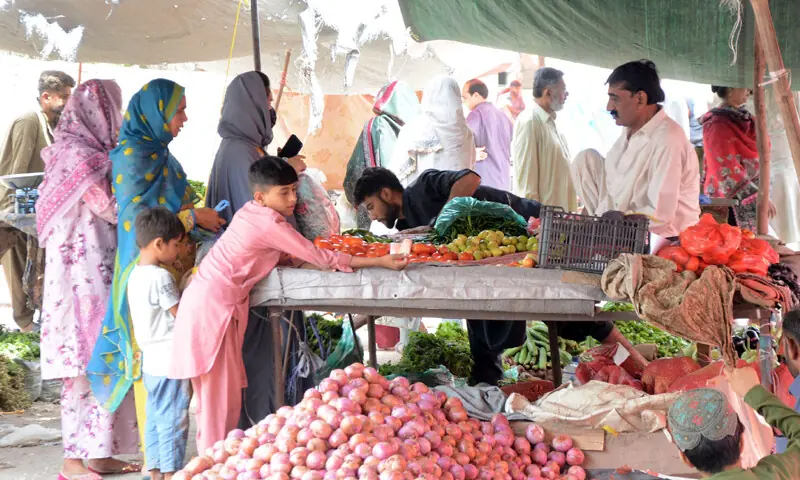
The granular price data show how broadly costs have spread. In urban food markets, wheat flour rose 11.21 per cent and wheat 7.78 per cent month-on-month in May. Potatoes, meat, cooking oil, and fresh milk all moved higher. Outside food, footwear jumped 29.04 per cent month-on-month, postal services rose 9.89 per cent, and a range of household and transport-linked goods also climbed. The breadth of price increases across categories makes it difficult for households to substitute their way out of the pressure.
With the fiscal year ending in June, the government's 7 per cent inflation target for FY26 is now clearly out of reach given the 6.69 per cent average already recorded through May and the current trajectory pointing higher. Whether the Strait of Hormuz situation eases before year-end will be the most important variable to watch. Any prolonged disruption to energy imports will keep transport and fuel costs elevated, sustaining the primary force behind the current inflation surge.