
Qatar Signals Progress in US-Iran War Talks
Qatar's foreign ministry said mediators including Qatar, Pakistan, and Oman have reached "very progressive stages" in efforts to end the US-Iran war, pushing Brent crude down more than four percent.
Key Takeaways
May 9, 2026 · 2 min read · By Rishabh Bhardwaj
·
AI-assisted, human-reviewed · Our editorial standards
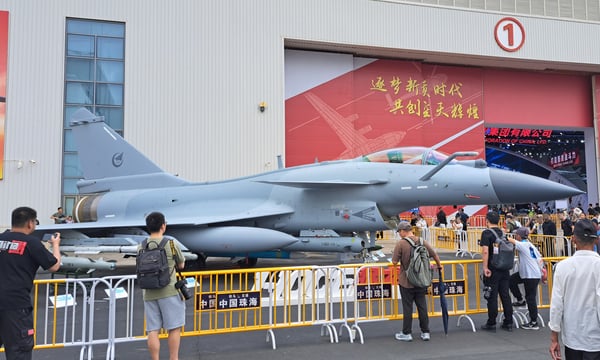
China's J-10C fighter jet has become a significantly more attractive export prospect following the aerial clashes between India and Pakistan in May 2025. The conflict gave the aircraft something no marketing campaign can manufacture: a combat record.
Pakistan operates the J-10C and used it during the clashes with India. The engagements, the most significant aerial confrontation between two nuclear-armed states in decades, put the J-10C's real-world performance in front of every air force procurement office watching. The phrase "battle-tested" carries outsized weight in defense markets, where buyers are purchasing national security, not just hardware.
Defense exports are driven by demonstrated performance more than specifications on paper. When a weapons system survives, or performs well in, a real conflict, demand from third-party buyers typically rises. The J-10C's appearance in the India-Pakistan clashes gave China's defense export pipeline a credibility boost that years of air shows and promotional videos could not provide.
China has been pushing hard to expand its arms export footprint, competing with established suppliers like Russia and Western manufacturers. The J-10C is produced by Chengdu Aircraft Corporation and represents one of China's more advanced domestically developed platforms. Before the 2025 clashes, it had limited combat exposure, which remained a common hesitation among potential buyers evaluating it against jets with established operational histories.
Countries in the Middle East, Southeast Asia, and Africa that are either diversifying away from Russian equipment or seeking alternatives to Western jets subject to political conditions are the most likely audience for an emboldened Chinese sales push. A battle-tested label lowers the perceived procurement risk for these buyers.
The broader consequence is a potential shift in the global arms market. If China can now credibly market the J-10C, and by extension other platforms, as proven in live combat against a modern opponent, it strengthens Beijing's position as a full-spectrum defense supplier, not merely a budget alternative.
What to watch: whether specific countries accelerate or announce J-10C procurement talks in the months following the clashes, and whether China's state defense firms use the conflict record explicitly in export pitches. Any such moves would confirm that the 2025 aerial engagements have directly reshaped the competitive landscape for fighter jet sales.
Qatar's foreign ministry said mediators including Qatar, Pakistan, and Oman have reached "very progressive stages" in efforts to end the US-Iran war, pushing Brent crude down more than four percent.
Qatar confirmed it is mediating between the US and Iran but said no direct talks are currently planned. The clarification follows conflicting statements from President Trump, who claimed talks are under way, and Tehran, which denied any dialogue is happening.
Saudi Aramco reported sharply higher second-quarter 2026 profits as the Iran war restricts global oil supply and pushes crude prices up. Other oil supermajors also posted outsized earnings, raising concerns about sustained fuel cost pressure for importing economies.
President Trump called current Iran negotiations the "last chance" to end five months of conflict, pushing oil prices higher. Tehran denied formal talks are taking place, raising the risk of a diplomatic breakdown with direct consequences for global energy markets.