
Qatar Signals Progress in US-Iran War Talks
Qatar's foreign ministry said mediators including Qatar, Pakistan, and Oman have reached "very progressive stages" in efforts to end the US-Iran war, pushing Brent crude down more than four percent.
Key Takeaways
May 9, 2026 · 2 min read · By Rishabh Bhardwaj
·
AI-assisted, human-reviewed · Our editorial standards
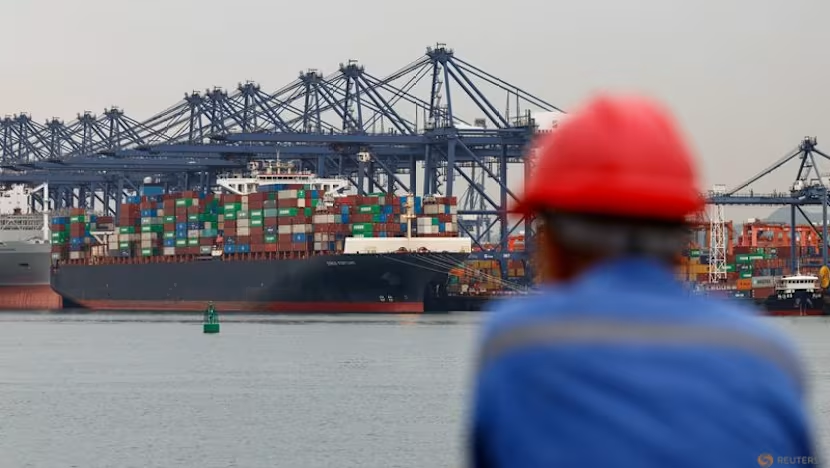
China's trade figures for April came in above expectations, suggesting the economy has so far absorbed the disruptions flowing from the US-Israel military campaign against Iran without a visible hit to export or import volumes.
The headline result beat forecasts, though the source does not provide specific trade figures. The stronger-than-expected outcome matters because analysts had flagged the Middle East conflict as a fresh risk for Chinese trade flows, particularly given China's exposure to energy imports from the region and shipping routes through the Persian Gulf and Red Sea.
China is one of the world's largest importers of crude oil, and a significant share of that supply moves through waters close to the conflict zone. Any sustained disruption to shipping lanes or a spike in insurance and freight costs could push up China's energy import bill and squeeze margins for energy-intensive industries.
For now, the April data suggests those risks have not materialized in a way that shows up in the trade numbers. That is a modest reassurance for investors watching China's export engine, which has been a rare bright spot in an economy still dealing with weak domestic demand and a fragile property sector.
China's exporters have also been navigating tariff pressures from the United States, making any additional supply chain disruption particularly poorly timed. A resilient trade result in this environment signals that manufacturers and logistics networks have, at least temporarily, found ways to route around the instability.
The conflict between the US, Israel, and Iran remains active, and its trajectory will determine whether April's relatively clean trade data holds into coming months. A broader escalation, particularly one that affects Strait of Hormuz traffic, would pose a more serious test. Freight rates, energy prices, and China's monthly trade releases over the next quarter are the key data points to watch.
Qatar's foreign ministry said mediators including Qatar, Pakistan, and Oman have reached "very progressive stages" in efforts to end the US-Iran war, pushing Brent crude down more than four percent.
Qatar confirmed it is mediating between the US and Iran but said no direct talks are currently planned. The clarification follows conflicting statements from President Trump, who claimed talks are under way, and Tehran, which denied any dialogue is happening.
Saudi Aramco reported sharply higher second-quarter 2026 profits as the Iran war restricts global oil supply and pushes crude prices up. Other oil supermajors also posted outsized earnings, raising concerns about sustained fuel cost pressure for importing economies.
President Trump called current Iran negotiations the "last chance" to end five months of conflict, pushing oil prices higher. Tehran denied formal talks are taking place, raising the risk of a diplomatic breakdown with direct consequences for global energy markets.