
Qatar Signals Progress in US-Iran War Talks
Qatar's foreign ministry said mediators including Qatar, Pakistan, and Oman have reached "very progressive stages" in efforts to end the US-Iran war, pushing Brent crude down more than four percent.
Key Takeaways
May 7, 2026 · 3 min read · By Rishabh Bhardwaj
·
AI-assisted, human-reviewed · Our editorial standards
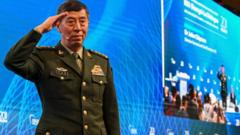
China has sentenced two former defence ministers to death with a two-year suspension, a punishment that under Chinese law typically converts to life imprisonment if the convicted person behaves well during that period.
The two officials are Wei Fenghe, who served as defence minister from 2018 to 2022, and Li Shangfu, who held the post from March to October 2023. Li Shangfu's tenure was notably brief, he disappeared from public view just months into the job before being formally removed. Both men were also expelled from the Communist Party and stripped of their political rights and personal assets.
In China's legal system, a suspended death sentence is distinct from immediate execution. The convicted person is held for two years, and if they commit no further offences, the sentence is commuted, usually to life in prison with no possibility of parole. It is widely used in high-profile corruption cases as a severe punishment short of execution, sending a strong political signal while keeping the door to commutation open.
Both verdicts were delivered by Chinese courts and follow corruption investigations that have swept through the upper ranks of the People's Liberation Army (PLA) over the past two years. The charges typically involve bribery, abuse of power, and misuse of state assets, though the specific findings against Wei and Li have not been detailed publicly beyond official announcements.
The sentencing fits a larger pattern. Several senior PLA figures have been removed, investigated, or punished in recent years, including former members of the Central Military Commission, the body that controls China's armed forces. The pace of removals has been unusually fast by historical standards, suggesting either a concentrated corruption problem at the top of the military or a deliberate consolidation of control.
For outside observers, the cases raise questions about the reliability and internal cohesion of China's military command, particularly given the geopolitical weight China's armed forces carry in tensions over Taiwan and in the South China Sea. A defence establishment cycling through ministers and dealing with high-level prosecutions is one that outside governments and defence planners will be watching closely.
What comes next is largely procedural: both men are expected to begin the two-year suspension period, after which commutation to life imprisonment is the standard outcome. Whether further military figures face charges remains an open question given the ongoing nature of the broader anti-corruption drive.
Qatar's foreign ministry said mediators including Qatar, Pakistan, and Oman have reached "very progressive stages" in efforts to end the US-Iran war, pushing Brent crude down more than four percent.
Qatar confirmed it is mediating between the US and Iran but said no direct talks are currently planned. The clarification follows conflicting statements from President Trump, who claimed talks are under way, and Tehran, which denied any dialogue is happening.
Saudi Aramco reported sharply higher second-quarter 2026 profits as the Iran war restricts global oil supply and pushes crude prices up. Other oil supermajors also posted outsized earnings, raising concerns about sustained fuel cost pressure for importing economies.
President Trump called current Iran negotiations the "last chance" to end five months of conflict, pushing oil prices higher. Tehran denied formal talks are taking place, raising the risk of a diplomatic breakdown with direct consequences for global energy markets.