
Qatar Signals Progress in US-Iran War Talks
Qatar's foreign ministry said mediators including Qatar, Pakistan, and Oman have reached "very progressive stages" in efforts to end the US-Iran war, pushing Brent crude down more than four percent.
Key Takeaways
May 12, 2026 · 3 min read · By Rishabh Bhardwaj
·
AI-assisted, human-reviewed · Our editorial standards
The United States and China have found rare common ground on a specific and consequential security question: neither country will accept another nation charging tolls to move ships through the Strait of Hormuz, the State Department confirmed to reporters on Tuesday.
The statement came after senior officials from both countries held talks, and it signals a deliberate effort by Washington and Beijing to align on pressure toward Iran, which controls access to one of the world's most critical shipping lanes.
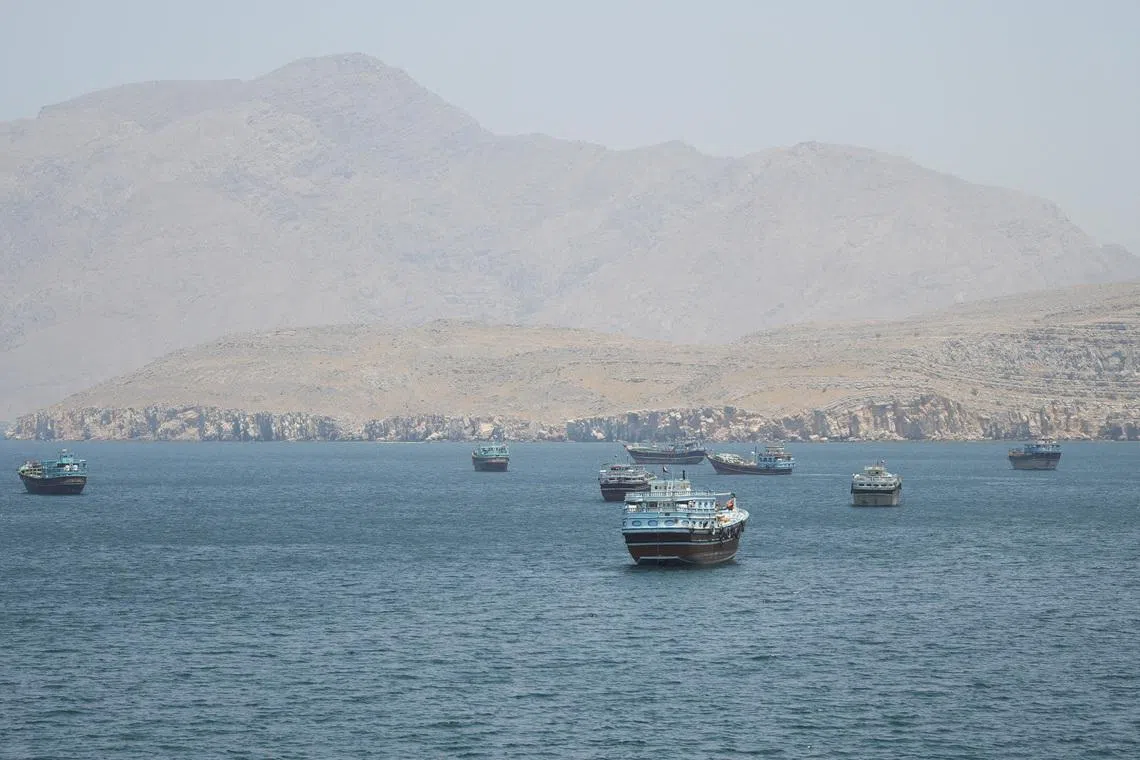
The Strait of Hormuz is a narrow waterway between Iran and Oman connecting the Persian Gulf to the Gulf of Oman. Roughly 20 percent of the world's oil supply passes through it, making it a chokepoint for global energy markets. Any move to tax or restrict transit there would immediately ripple through crude prices, tanker rates, and energy costs worldwide.
Iran has periodically threatened to close or control the strait during moments of geopolitical tension, particularly when its own oil exports face international sanctions. The idea that Tehran could demand tolls from ships passing through represents a newer and more commercially disruptive form of that pressure.
Shared opposition to Hormuz tolls is notable because the two countries are simultaneously locked in a bruising trade dispute and competing for influence across the Middle East. Finding a point of explicit public agreement on Iran policy is unusual and suggests both governments see a specific benefit in signaling this position together.
For China, the stakes are direct. Beijing is the largest buyer of Iranian oil and also one of the biggest importers of Gulf crude from Saudi Arabia, the UAE, and Iraq. Any toll regime or disruption in the strait would raise China's energy import costs and threaten supply reliability, which is a core economic concern for Beijing's planners.
For the United States, getting China to openly oppose Iranian control of the strait strengthens the diplomatic case for pressuring Tehran. It also reduces the risk that China would quietly back or benefit from any Iranian move to monetize Hormuz access.
The practical mechanism here is reputational and diplomatic rather than military. A joint US-China position effectively tells Tehran that two of the world's largest economies and permanent UN Security Council members will not legitimize or tolerate toll collection at Hormuz. That narrows Iran's diplomatic space if it ever tried to formalize such a mechanism.
Whether this shared position translates into coordinated action, such as joint pressure at the UN or synchronized sanctions policy, is not clear from the current statement. The State Department described agreement between senior officials, not a formal treaty or enforcement framework. The alignment is real but its depth is still being tested.
Energy markets will watch closely for any follow-through. If the US-China position hardens into a coordinated diplomatic front, it could reduce the risk premium that traders attach to Gulf oil routes. If it stays at the level of a shared talking point, the effect on Iran's calculus may be limited.
The next indicators to watch are whether China raises the Hormuz position in its own direct talks with Iran, and whether both countries coordinate at the UN or in multilateral forums on broader Iran nuclear and sanctions questions.
Qatar's foreign ministry said mediators including Qatar, Pakistan, and Oman have reached "very progressive stages" in efforts to end the US-Iran war, pushing Brent crude down more than four percent.
Qatar confirmed it is mediating between the US and Iran but said no direct talks are currently planned. The clarification follows conflicting statements from President Trump, who claimed talks are under way, and Tehran, which denied any dialogue is happening.
Saudi Aramco reported sharply higher second-quarter 2026 profits as the Iran war restricts global oil supply and pushes crude prices up. Other oil supermajors also posted outsized earnings, raising concerns about sustained fuel cost pressure for importing economies.
President Trump called current Iran negotiations the "last chance" to end five months of conflict, pushing oil prices higher. Tehran denied formal talks are taking place, raising the risk of a diplomatic breakdown with direct consequences for global energy markets.