Congress MP Priyanka Gandhi Vadra called on the central government to implement the Women's Reservation Act of 2023 on the current Lok Sabha membership, bypassing the condition that the law take effect only after a fresh delimitation exercise. Her statement frames the demand as a matter of immediate political will rather than procedural sequencing. The Women's Reservation Act, passed in 2023, reserves one-third of Lok Sabha and state assembly seats for women but links activation to a census and subsequent delimitation, a process that has no fixed timeline. By demanding application to the existing House strength, the Opposition is pressuring the ruling coalition to decouple implementation from the delimitation trigger. Priyanka Gandhi also characterized recent political developments as a defeat of what she described as the Centre's attempt to alter the federal structure, crediting Opposition unity. The demand sharpens a fault line heading into future electoral cycles, with women's political representation and federal balance both now live legislative battlegrounds.
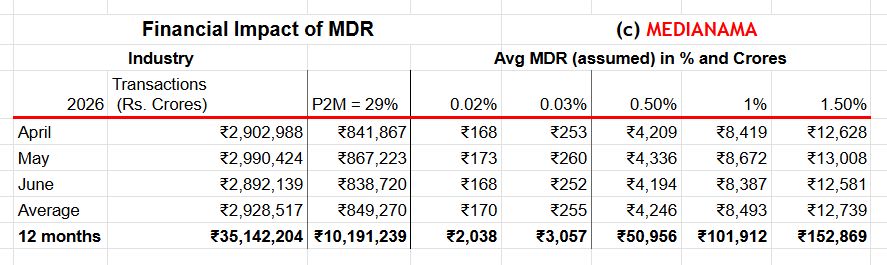
India's government plans to amend the Payment and Settlement Systems Act to restore UPI merchant discount rates, ending the zero-MDR regime in place since January 2020.
India's government has introduced the Taxation and Other Laws (Amendment) Bill, 2026, proposing changes to payments regulation, income tax, and the Finance Act to attract FDI and support Make in India. The Bill's final shape will depend on parliamentary debate and committee review.
The government's Taxation and Other Laws (Amendment) Bill, 2026, proposes to replace the blanket UPI MDR ban with a system allowing the Centre to notify which payment modes stay fee-free.
Prime Minister Narendra Modi inaugurated the Rs 5,000 crore Bhogapuram greenfield airport in Andhra Pradesh, built under a public-private partnership model. He also laid foundation stones for infrastructure projects worth nearly Rs 18,000 crore in the state, signalling a broad investment push for the region.