India's Central Bureau of Investigation has arrested a senior executive of a major corporate group in connection with a drone import bribery case involving the Directorate General of Civil Aviation. A DGCA public servant allegedly demanded undue advantage from private individuals in exchange for issuing approvals and permissions on pending applications filed by a private aerospace company. The mechanism is straightforward: regulatory clearances required for drone imports were allegedly being monetized, with the corporate executive serving as the conduit between the private aerospace company and the DGCA official. The case exposes a pressure point in India's fast-expanding drone sector, where import and operational permits flow through a single regulatory body. Businesses seeking DGCA approvals in aerospace and drone-adjacent segments face heightened scrutiny risk in the near term, and the arrest signals CBI's active posture on aviation-sector corruption. The identity of the aerospace company and the specific approvals sought have not been disclosed in the CBI's statement.
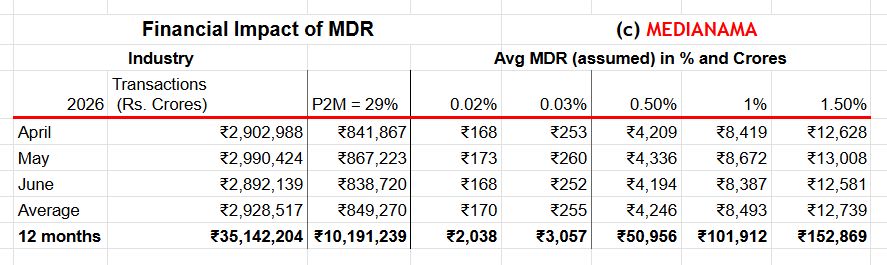
India's government plans to amend the Payment and Settlement Systems Act to restore UPI merchant discount rates, ending the zero-MDR regime in place since January 2020.
India's government has introduced the Taxation and Other Laws (Amendment) Bill, 2026, proposing changes to payments regulation, income tax, and the Finance Act to attract FDI and support Make in India. The Bill's final shape will depend on parliamentary debate and committee review.
The government's Taxation and Other Laws (Amendment) Bill, 2026, proposes to replace the blanket UPI MDR ban with a system allowing the Centre to notify which payment modes stay fee-free.
Prime Minister Narendra Modi inaugurated the Rs 5,000 crore Bhogapuram greenfield airport in Andhra Pradesh, built under a public-private partnership model. He also laid foundation stones for infrastructure projects worth nearly Rs 18,000 crore in the state, signalling a broad investment push for the region.