Cash transfer programs targeting women voters have become a defining feature of India's state election campaigns, reshaping how parties compete for electoral mandates. Multiple state governments and opposition parties have deployed direct benefit schemes promising monthly payments to women as central planks of their platforms, shifting campaign arithmetic away from traditional caste coalitions toward gender-based economic mobilization. The pattern has accelerated across states including Madhya Pradesh, Rajasthan, Chhattisgarh, and Telangana, where ruling and challenger parties alike have introduced or expanded cash transfer commitments to female constituents. Amounts vary by state and party, but the competitive dynamic has pushed parties to outbid each other on payout levels, with some promises reaching several hundred rupees per month per beneficiary. The fiscal mechanism works through direct bank transfers under women's accounts, often linked to existing welfare infrastructure. Critics and fiscal analysts flag the cumulative cost pressure on state budgets already carrying subsidy loads, raising questions about debt sustainability at the sub-sovereign level. What to watch: whether the Reserve Bank of India or central government introduces guardrails on state fiscal commitments, and how voters weigh cash transfers against delivery track records in upcoming election cycles.
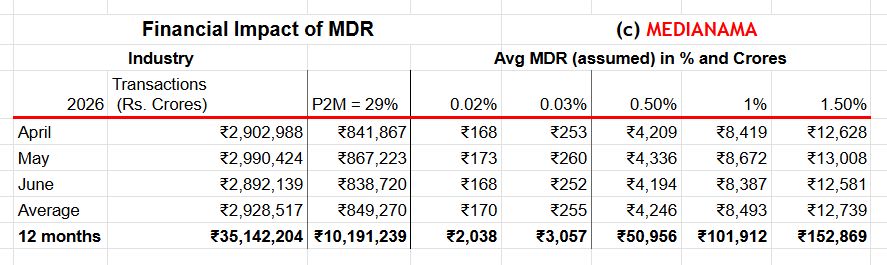
India's government plans to amend the Payment and Settlement Systems Act to restore UPI merchant discount rates, ending the zero-MDR regime in place since January 2020.
India's government has introduced the Taxation and Other Laws (Amendment) Bill, 2026, proposing changes to payments regulation, income tax, and the Finance Act to attract FDI and support Make in India. The Bill's final shape will depend on parliamentary debate and committee review.
The government's Taxation and Other Laws (Amendment) Bill, 2026, proposes to replace the blanket UPI MDR ban with a system allowing the Centre to notify which payment modes stay fee-free.
Prime Minister Narendra Modi inaugurated the Rs 5,000 crore Bhogapuram greenfield airport in Andhra Pradesh, built under a public-private partnership model. He also laid foundation stones for infrastructure projects worth nearly Rs 18,000 crore in the state, signalling a broad investment push for the region.