India's Union Cabinet, chaired by Prime Minister Narendra Modi, approved a Sovereign Maritime Fund on Saturday to provide insurance coverage for Indian-flagged vessels and ships bound for or originating from India. The decision targets three categories of maritime exposure simultaneously, signaling a structural shift in how India manages shipping risk at the sovereign level. The fund addresses a persistent vulnerability in Indian trade logistics: dependence on foreign insurers for marine coverage. Global disruptions, from Red Sea attacks to sanctions-driven exclusion zones, have exposed the cost and fragility of routing marine insurance through external underwriters, particularly for state-linked cargo. By internalizing insurance capacity, India reduces its exposure to foreign policy decisions and premium volatility embedded in global reinsurance markets. The mechanism also gives Indian operators access to coverage that may otherwise be withheld or priced prohibitively during geopolitical stress events. The immediate watch item is fund capitalization and governance structure, details that will determine whether the instrument can credibly backstop large-vessel or high-value cargo claims. Execution depth, not policy intent, will define the fund's real impact on Indian shipping competitiveness.
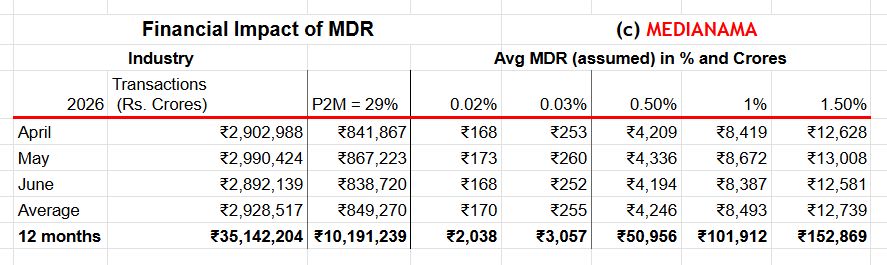
India's government plans to amend the Payment and Settlement Systems Act to restore UPI merchant discount rates, ending the zero-MDR regime in place since January 2020.
India's government has introduced the Taxation and Other Laws (Amendment) Bill, 2026, proposing changes to payments regulation, income tax, and the Finance Act to attract FDI and support Make in India. The Bill's final shape will depend on parliamentary debate and committee review.
The government's Taxation and Other Laws (Amendment) Bill, 2026, proposes to replace the blanket UPI MDR ban with a system allowing the Centre to notify which payment modes stay fee-free.
Prime Minister Narendra Modi inaugurated the Rs 5,000 crore Bhogapuram greenfield airport in Andhra Pradesh, built under a public-private partnership model. He also laid foundation stones for infrastructure projects worth nearly Rs 18,000 crore in the state, signalling a broad investment push for the region.