India's passenger vehicle industry has endorsed the CAFE III (Corporate Average Fuel Economy) framework, with new CO2 emission limits set to take effect from April 1, 2027. The Society of Indian Automobile Manufacturers (SIAM) confirmed broad industry consensus on the draft norms, describing the guidelines as balanced. The government is expected to issue a final notification shortly. Annual fleet emission improvement targets will run through 2031-32, giving manufacturers a multi-year compliance runway. The phased structure signals a deliberate regulatory design: binding enough to drive product investment, flexible enough to allow fleet transition without immediate disruption. For automakers, the timeline anchors R&D and product planning cycles around electrification and powertrain efficiency upgrades. Compliance failure typically carries financial penalties tied to fleet-wide average performance rather than individual models, concentrating risk on volume manufacturers with emissions-heavy lineups. Investors and analysts should watch the final notification for specific CO2 thresholds and penalty structures, which will determine the true cost of compliance across OEM portfolios.
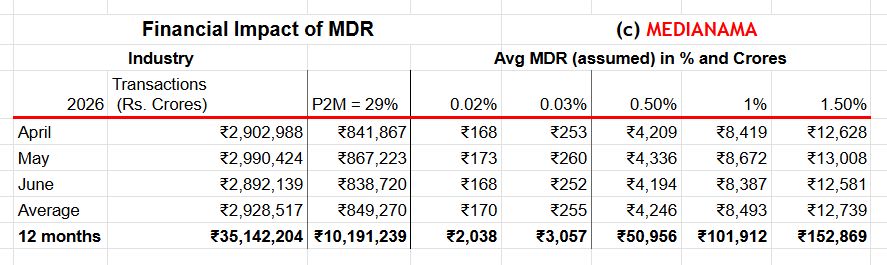
India's government plans to amend the Payment and Settlement Systems Act to restore UPI merchant discount rates, ending the zero-MDR regime in place since January 2020.
India's government has introduced the Taxation and Other Laws (Amendment) Bill, 2026, proposing changes to payments regulation, income tax, and the Finance Act to attract FDI and support Make in India. The Bill's final shape will depend on parliamentary debate and committee review.
The government's Taxation and Other Laws (Amendment) Bill, 2026, proposes to replace the blanket UPI MDR ban with a system allowing the Centre to notify which payment modes stay fee-free.
Prime Minister Narendra Modi inaugurated the Rs 5,000 crore Bhogapuram greenfield airport in Andhra Pradesh, built under a public-private partnership model. He also laid foundation stones for infrastructure projects worth nearly Rs 18,000 crore in the state, signalling a broad investment push for the region.