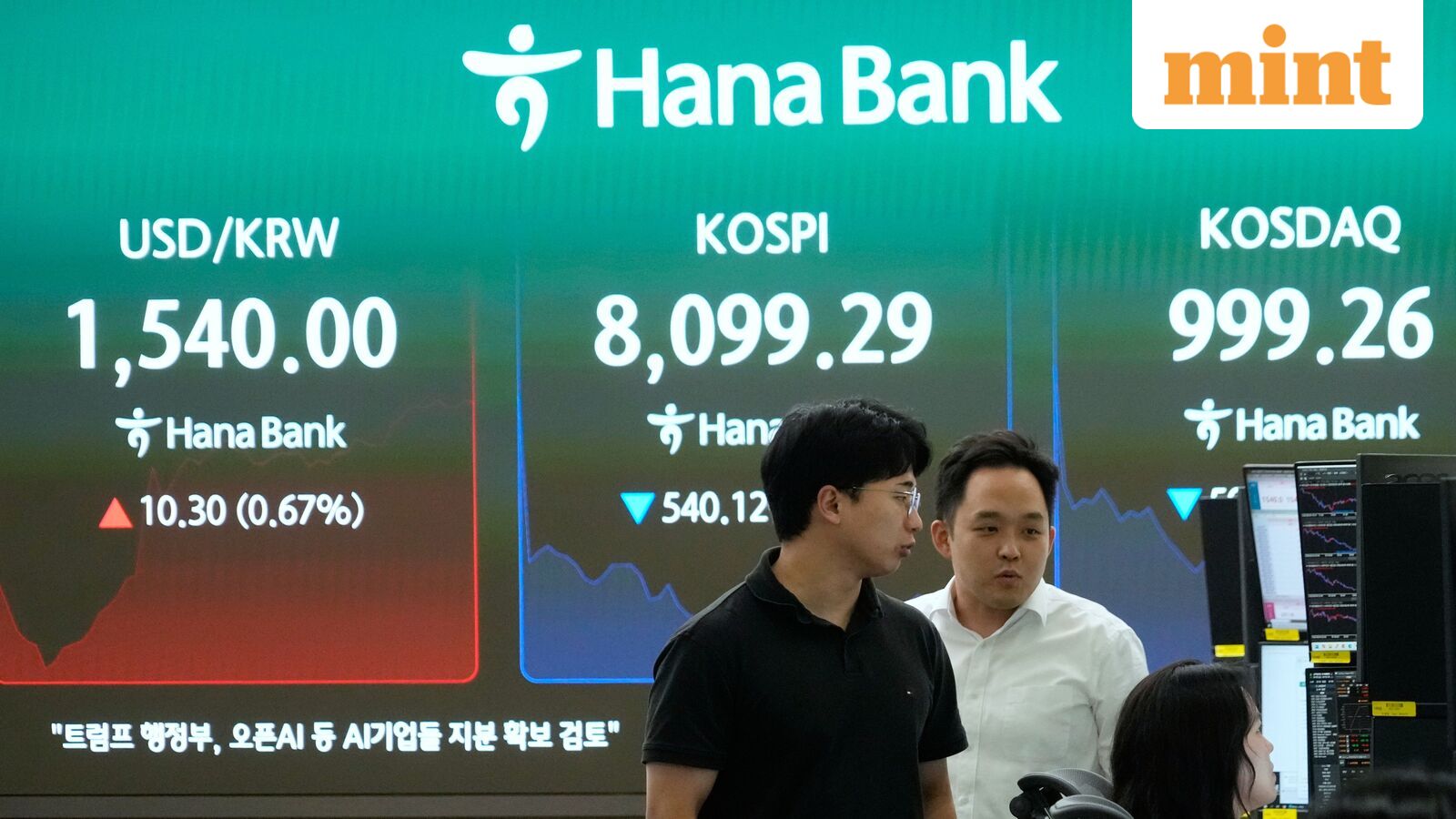
Asian equity markets opened sharply lower on Monday as rising tensions in the US-Iran conflict rattled investor confidence across the region. South Korea's Kospi fell 3% at the open, while Japan's Nikkei 225 declined 1%, making them the session's hardest-hit benchmarks.
Japan's broader Topix index moved in the opposite direction, gaining 0.43%, suggesting the sell-off was uneven and concentrated in specific sectors or larger-cap stocks that dominate the Nikkei. The divergence between the Nikkei and Topix points to selective pressure rather than an across-the-board market rout in Japan.
South Korea's steeper 3% drop at the open reflects the country's particular vulnerability to geopolitical shocks in the Middle East. South Korea is one of Asia's largest oil importers, and any escalation that threatens supply routes through the Gulf or spikes crude prices hits Korean industrial and energy costs directly. The Kospi is also heavily weighted toward export-driven manufacturers and chipmakers whose global supply chains are sensitive to risk-off sentiment.
Why It Matters
When US-Iran tensions escalate, financial markets treat it as a supply shock risk. Oil prices tend to rise on fears that Gulf shipping lanes could be disrupted, and higher energy costs flow quickly into corporate margins across manufacturing-heavy Asian economies. Investors also move money out of riskier assets, including emerging market equities, and into safer alternatives like US Treasuries, gold, or the Japanese yen.
That flight-to-safety dynamic can amplify selling pressure in markets like South Korea, where foreign institutional investors hold a significant share of listed equities. When global risk appetite drops, those investors often reduce exposure to higher-beta markets first, accelerating the declines seen at the open.
Japan's split outcome, a falling Nikkei alongside a rising Topix, may reflect currency effects. A stronger yen, which typically appreciates during geopolitical stress as investors seek safe-haven assets, tends to weigh on export-heavy Nikkei components like automakers and electronics firms. Domestically focused companies, which make up a larger share of the Topix, are less sensitive to yen moves and may have held up better.
What to Watch Next
The direction of Asian markets through the rest of the session will depend heavily on how the US-Iran situation develops and whether commodity markets, especially crude oil, see further moves. A sustained spike in oil prices would deepen pressure on energy-importing economies across Asia. Investors will also watch whether the yen continues to strengthen, which could extend the Nikkei's underperformance relative to the broader Topix.
Any diplomatic signals, official statements from Washington or Tehran, or military developments will be closely tracked. South Korean markets are also sensitive to broader regional security conditions given the country's proximity to other geopolitical flashpoints, meaning any widening of the conflict could keep the Kospi under pressure beyond the opening session.
For now, the early Monday moves signal that markets are pricing in a higher risk environment, but the session is early and outcomes will shift with incoming headlines.