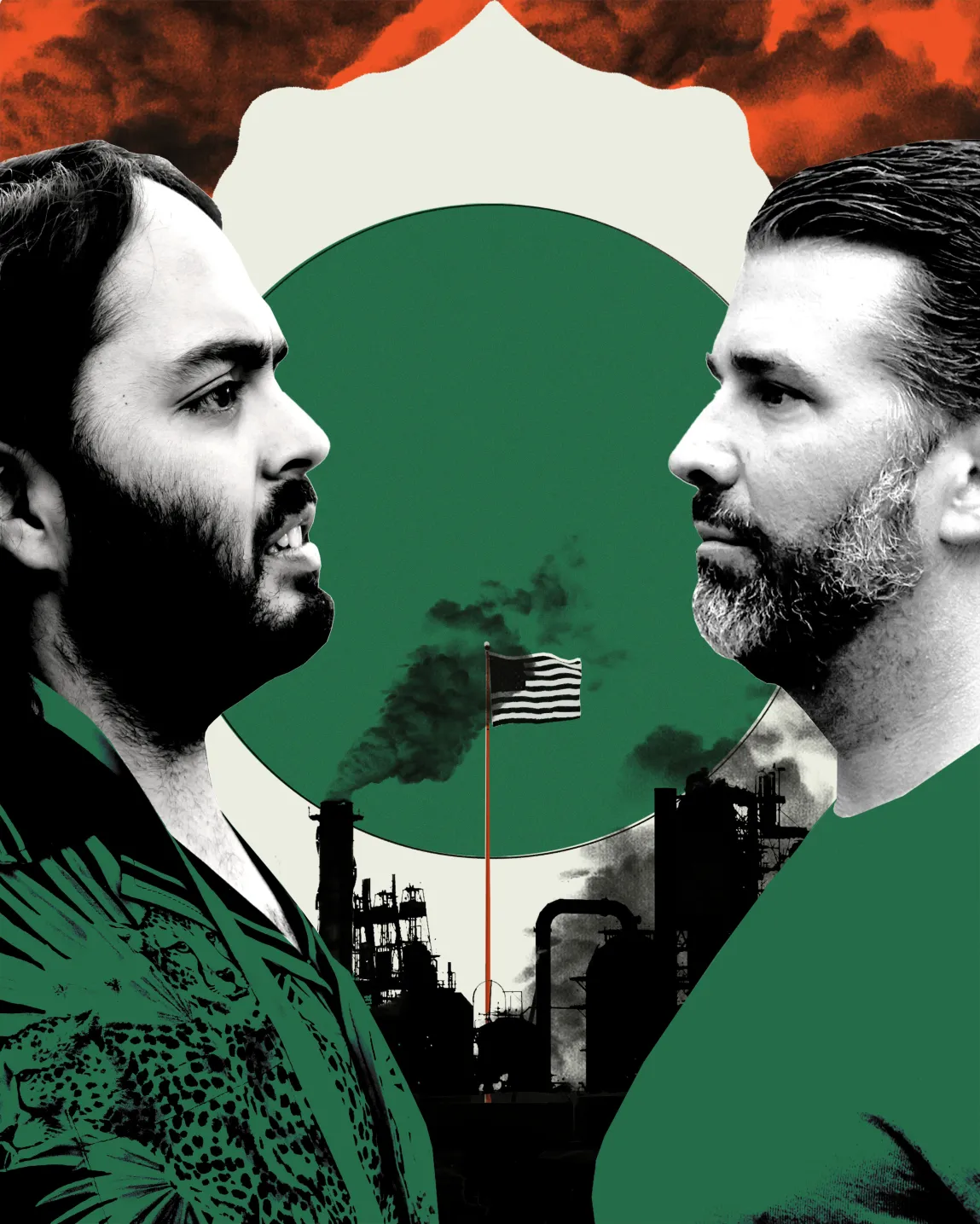
A Texas oil refinery startup with a troubled history received a nine-figure investment from India's Reliance Industries, owned by billionaire Mukesh Ambani, after Donald Trump Jr. quietly acquired a stake in the company, according to records and seven people familiar with the matter. The deal, which President Trump personally celebrated on Truth Social, raises direct questions about whether overseas investors with business before the administration are being funneled toward Trump family financial interests.
The startup, America First Refining, aims to build the first major new oil refinery in the United States in roughly 50 years at the Port of Brownsville on the Gulf Coast. Its CEO, John Calce, has been working on the project for more than a decade. That decade was marked by repeated failures: missed deadlines, multiple rebrands, worker layoffs, eight simultaneous lawsuits from former business partners, and a bankruptcy trustee who sued Calce himself, alleging that insiders had improperly moved assets. Calce denied wrongdoing, and the case settled.
The Ambani family's path to this investment ran directly through escalating political pressure. In the summer of 2025, the Trump administration targeted Reliance Industries by name over its purchase of discounted Russian oil. President Trump doubled tariffs on India to 50%, and White House trade adviser Peter Navarro publicly attacked what he called India's politically connected energy titans for funding what he described as Putin's war machine, a reference widely understood to mean the Ambanis. Reliance is one of India's largest companies, and Mukesh Ambani is worth an estimated $90 billion.
The November Visit and What Followed
In late November, Trump Jr. traveled to Jamnagar, India, where he toured the Ambani family's private zoo and performed a Gujarati folk dance with Anant Ambani, Mukesh's son. At the end of that trip, Trump Jr.'s personal attorney, John Willding, speaking at a Miami business conference, said: "I had a nice closing this morning with Don Trump Jr., who's flying back from India today." The following week, the Texas startup filed paperwork to create America First Refining LLC, changing its name from Element Fuels. Willding later told ProPublica he had "zero involvement" in the Reliance deal and was simply excited by the press release. America First Refining called Willding's original comment "moronic and false."
Four months after Trump Jr.'s India visit, Reliance announced its investment in America First Refining at a valuation of at least $1 billion. Anant Ambani personally worked on the deal for months, a major Indian newspaper reported. Bloomberg's headline read: "Reliance Goes From Trump Foe to Friend With Refinery Pledge." Around the same time, U.S.-India relations warmed noticeably. The Trump administration struck a trade deal with India, lowering tariffs, reportedly gave Reliance a license to buy Venezuelan oil, and provided India a sanctions waiver to purchase Russian crude.
Trump Jr.'s spokesperson described him as "a passive minority investor" with no operational role and said he "does not interface with the Federal Government on behalf of any company that he invests in or advises." The White House said there are "no conflicts of interest." Reliance stated its investment was evaluated entirely on commercial merit and that the company received no preferential treatment from the U.S. government.
Government Help and Political Fingerprints
The deal carries other visible marks of the Trump administration's involvement. Calce said publicly that the National Energy Dominance Council, led by the interior and energy secretaries, helped introduce his company to potential foreign investors. "We have received support from the White House," he told a local news outlet. Howard Lutnick's firm Cantor Fitzgerald, whose sons took over day-to-day management when Lutnick became Trump's commerce secretary, is serving as financial adviser to America First Refining on the Reliance deal. Cantor Fitzgerald declined to comment.
America First Refining also pitched foreign investors with Trump family access as a selling point. The company brought Trump Jr. to a South Florida meeting with potential Saudi investors early last year, according to two people familiar with the matter. A separate foreign government official told ProPublica that the company's team suggested an investment would help with White House access. ProPublica found no evidence Trump Jr. was aware of that pitch.
Questions also surround a separate Calce company called Brownsville Energy Storage Terminals, whose website claims a global network of oil storage terminals, more than 850 employees, and an experienced executive team. ProPublica could find no evidence the listed executives are real people or that the terminals exist. Phone numbers on the site trace back to a baklava caterer, a taxi service, and an OB-GYN office.
Inside Texas state government, emails obtained by ProPublica show regulators rushed to approve an America First Refining permit extension in February. "Need to get this one logged and processed asap," one official wrote. Another told a colleague: "You can guess if you check out the name." The permit was approved the next day. The Texas Commission on Environmental Quality said the request was handled quickly due to the quality of information provided.
America First Refining is now exploring an initial public offering, according to three people close to the company. A public listing would let current investors, including Trump Jr., cash out even if the refinery is never built. Energy economists remain deeply skeptical the project will succeed. "Refineries cost a lot of money and essentially make pennies on the dollar," said Ed Hirs, an energy economist in Houston. "Wall Street is not going to finance a new refinery." By late 2025, officials at the Port of Brownsville themselves believed the project looked to be dead. What has kept it alive, at least on paper, appears to be its connections to the most powerful political family in the country.