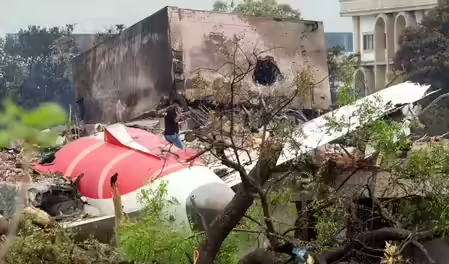
India's Aircraft Accident Investigation Bureau (AAIB) will release an interim report next month on the Air India crash that killed 260 people in Ahmedabad in June 2025, one year after the accident. The report will cover established facts gathered so far. A final report is still pending further consultations.
The crash is among the deadliest aviation accidents in Indian history. The Air India flight went down shortly after take-off from Ahmedabad, and the scale of the loss prompted immediate regulatory scrutiny of aircraft maintenance, crew procedures, and ground handling protocols.
What the preliminary findings show
Early investigation findings pointed to a specific mechanical sequence: fuel control switches on the aircraft moved from the 'run' position to 'cut off' after take-off. That movement would shut off fuel supply to the engines, causing an abrupt loss of power. The AAIB has not yet publicly confirmed whether this was a mechanical failure, a procedural error, or something else. That determination is expected to form a core part of the final report.
Fuel control switches are critical cockpit components that govern fuel flow to engines. Their position is normally set before flight and left unchanged during take-off. A switch moving to 'cut off' mid-flight, whether through human error, a system fault, or external force, would almost immediately starve the engines of fuel and remove thrust at the most vulnerable phase of flight.
Why the interim report matters
Aviation investigations of this complexity typically take two to three years to complete. An interim report serves a different purpose than a final one: it puts established facts on the record, gives airlines, regulators, and aircraft manufacturers a shared baseline, and can trigger safety directives even before root cause is confirmed.
For Air India, which is in the middle of a large-scale fleet expansion and operational overhaul under Tata Group ownership, the report lands at a sensitive moment. Regulators, insurers, and international aviation bodies will watch the interim findings closely. If the AAIB identifies any systemic procedural or maintenance gaps, the Directorate General of Civil Aviation could issue fresh safety directives affecting not just Air India but other Indian carriers operating the same aircraft type.
Families of the 260 people killed have been waiting nearly a year for any official factual account of what happened. The interim report will be the first formal document to put verified details into the public record, even if it stops short of assigning cause or responsibility.
International aviation safety bodies, including those in the country where the aircraft was manufactured, are likely to be among the consultees holding up the final report. Cross-border investigations of this kind require sign-off from multiple technical authorities before conclusions can be published, which explains the gap between preliminary findings and a final determination.
The next step to watch is the interim report's release and whether it contains any safety recommendations. Even interim recommendations carry regulatory weight and can compel airlines or manufacturers to act before a final report is ready. Any such directions would be a signal of how seriously the AAIB views the findings gathered so far.