India to Restore UPI Merchant Fees, PhonePe Gains Most
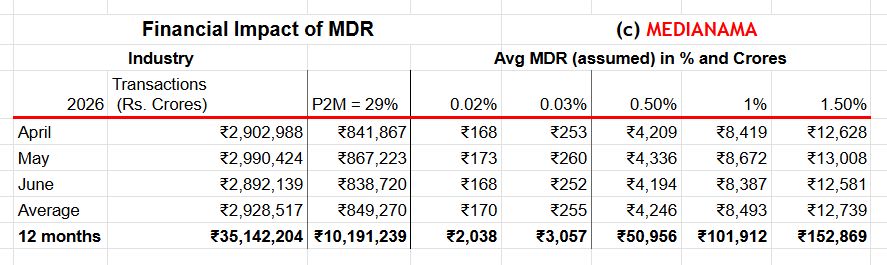
India's government plans to amend the Payment and Settlement Systems Act to restore UPI merchant discount rates, ending the zero-MDR regime in place since January 2020.
Key Takeaways
May 31, 2026 · 3 min read · By Rishabh Bhardwaj
·
AI-assisted, human-reviewed · Our editorial standards

The 8th Pay Commission has scheduled field visits to Kolkata on July 9 and 10, 2026, and will also travel to Srinagar and Ladakh in June. To give employees and organisations more time to submit their views, the commission has extended the memorandum submission deadline to June 15, 2026.
Pay commissions are bodies set up by the central government to review and recommend revised salaries, allowances, and pensions for central government employees and pensioners. The 8th Pay Commission's recommendations will apply to millions of central government workers and retirees across India.
Regional visits allow the commission to hear directly from employee groups, unions, and state-level associations that may not have easy access to Delhi. Kolkata, Srinagar, and Ladakh represent distinct administrative and geographic contexts, and submissions from these regions can shape how the commission weighs location-specific allowances and service conditions.
Extending the memorandum deadline to June 15 gives organisations and individuals more time to prepare structured submissions. A memorandum in this context is a formal written representation, typically detailing demands or suggestions on pay structures, allowances, and service conditions.
The commission's final recommendations are due within 18 months of its formation. It is required to factor in economic conditions and fiscal discipline, meaning the government's capacity to absorb higher salary and pension payouts will directly influence what the commission recommends. A balance between employee expectations and the central government's budget constraints is the central tension in every pay commission cycle.
The government typically implements pay commission recommendations after reviewing the fiscal impact, sometimes accepting them in full, sometimes with modifications. The 7th Pay Commission's recommendations, implemented from 2016, significantly raised the minimum pay and revised the fitment formula used to calculate revised salaries.
For central government employees, the 8th commission's output will determine take-home pay, retirement benefits, and the structure of allowances for years ahead. For pensioners, it will set revised pension amounts and dearness relief calculations.
From a fiscal standpoint, any significant upward revision in the pay matrix raises the government's salary and pension bill, which flows through to the Union Budget. Markets and analysts watch pay commission cycles because a large wage revision can boost consumer spending, particularly in tier-2 and tier-3 cities where government employment is concentrated.
The extended June 15 deadline and the upcoming regional meetings suggest the commission is still in its data-gathering phase. The Kolkata visit in July and the Srinagar and Ladakh visits in June are part of a structured outreach before the commission moves toward drafting its recommendations. Employees and associations who have not yet filed memorandums have until mid-June to do so.
India's government plans to amend the Payment and Settlement Systems Act to restore UPI merchant discount rates, ending the zero-MDR regime in place since January 2020.
India's government has introduced the Taxation and Other Laws (Amendment) Bill, 2026, proposing changes to payments regulation, income tax, and the Finance Act to attract FDI and support Make in India. The Bill's final shape will depend on parliamentary debate and committee review.
The government's Taxation and Other Laws (Amendment) Bill, 2026, proposes to replace the blanket UPI MDR ban with a system allowing the Centre to notify which payment modes stay fee-free.
Prime Minister Narendra Modi inaugurated the Rs 5,000 crore Bhogapuram greenfield airport in Andhra Pradesh, built under a public-private partnership model. He also laid foundation stones for infrastructure projects worth nearly Rs 18,000 crore in the state, signalling a broad investment push for the region.